If we still fall into the trap of magical thinking in religious circles today, what is the distinction between true religion and magic? Why is a prayer for God’s protection, healing, or blessing different from a magic spell or invocation?
 At the start of his seminal work, Religion and the Decline of Magic, Keith Thomas first shows how medieval culture was locked into magical thinking. Magical thinking may be defined as the delusion that by the incantation of certain formulas and the manipulation of material things, supernatural powers will bring about a desired result. The sorcerer casts a spell, invokes the gods, tinkers with arcane trinkets or natural substances, and thereby either protects himself or attracts to himself some benefit: health, wealth, pleasure, or prosperity.
Not only was popular culture infused with superstition, but (despite the official teaching of the church) the popular practice of Christianity was infected with magical thinking. Relics, sacramentals, shrines, devotion to patron saints, special prayers, pilgrimages, and practices maintained their power in people’s minds through magical thinking. So, for example, like a magic spell, a prayer to St Bridget might heal your cow, or like a talisman, the relic of St Thomas Becket might heal leprosy, blindness, or a whole range of other ailments. Wonderworking water from a holy well might ward off devils, heal illnesses, and bring blessings.
Keith Thomas goes on to show how the Protestant Revolution challenged not only magical thinking, but especially the magical thinking that was part of medieval Christendom. The Reformers aimed to sweep away all the priestcraft and magical apparatus of medieval Catholicism.
However, the distinction between magical thinking and Christianity was not so clear-cut as one might hope. Magical thinking persisted in both Protestant and Catholic circles, and in many ways, the Protestant Revolution, in challenging the superstitions of medieval Catholicism, highlighted the issue. In what sense was the Christian religion supernatural? Catholics continued to claim miracles and supernatural phenomena as evidence for their religion’s authenticity, while Protestants denounced Catholic miracles as works of the devil.
In They Flew, Carlos Eire’s recent study of St Joseph of Cupertino (reviewed here), Eire recounts how in Catholic Spain and Italy in the seventeenth century, marvels and prodigies abounded. In what sense were the levitations, bi-locations, healings, and mystical wonders of that period an outpouring of the authentically supernatural, and how much were they the product of corporate, magical thinking?
The proposal here is not that the prodigies and marvels were fraudulent stories devised by charlatans for gullible souls, but that magical thinking—so much a part of the medieval cosmology—once suppressed, burst forth in genuinely astounding and inexplicable phenomena.
That the miracles and marvels should burgeon just when the challenge to the supernatural was accelerating, causes one to press further on the strange relationship between religion and magic.
Is religion inherently magical? Must it be? Certainly, any examination of pagan religion is inherently magical. The rites and rituals of the shamans, priests, diviners, necromancers, astrologers, magi ,and other assorted sorcerers were based on magic, and to be honest, it is difficult to disentangle magical thinking even from contemporary Christianity. When a priest celebrates a sacrament is he not intoning the special words, manipulating the sacred elements, and expecting a supernatural result? When a charismatic Christian lapses into a semi-trance, moans in ecstasy, and mutters in glossolalia, then pronounces prayers of healing or deliverance, is he not engaged in magical thinking and behavior? How different is our approach to scapulars, blessed candles, holy oil, holy water, novenas and relics to the occult practitioners, with their candles and charms, their amulets, spells, invocations, and incantations?
In Religion and the Decline of Magic, Thomas shows how belief in the power of prayer, prophecy, and God’s providence continued to exercise a kind of magical hold on believers despite the repudiation of magic and superstition. The Bible was a supernatural book, prayer was the way to get what was desired, and God’s providence worked in the world like a mysterious power that could be magically invoked in times of need.
If we still fall into the trap of magical thinking in religious circles today, what is the distinction between true religion and magic? Why is a prayer for God’s protection, healing, or blessing different from a magic spell or invocation? Simply because we are invoking God, and they are invoking a devil? Why is a priest celebrating the sacraments, blessing a home, or conducting an exorcism different from a magician doing virtually the same thing? Why is the faithful Christian’s belief in these things different from the believer in magic?
The answer is subtle and is given in the wisdom of the Lord’s Prayer. The first phrases of the Pater Noster are recognition and praise of God’s omnipotence, followed by submission to His will. After thanks and repentance, the prayer concludes with a plea for deliverance (and therefore repudiation of) evil.
Because the believer or practitioner of magic is using words and manipulation of matter to achieve his own aims, at its foundation, magical thinking says to God, “My will be done.” The Christian works from the opposite foundation—beginning all prayer, worship, and supplication with the words “Thy will be done,” followed by a repudiation of all evil powers.
True religion is always a submission to the divine will. From the garden of Eden onward, magic has always been a means to manipulate the divine will and thereby emulate the Father of Lies—the master of all magic.
__________
Fr. Longenecker’s latest book Bloodshed and Blessing is published by Sophia Institute Press.
The Imaginative Conservative applies the principle of appreciation to the discussion of culture and politics—we approach dialogue with magnanimity rather than with mere civility. Will you help us remain a refreshing oasis in the increasingly contentious arena of modern discourse? Please consider donating now.
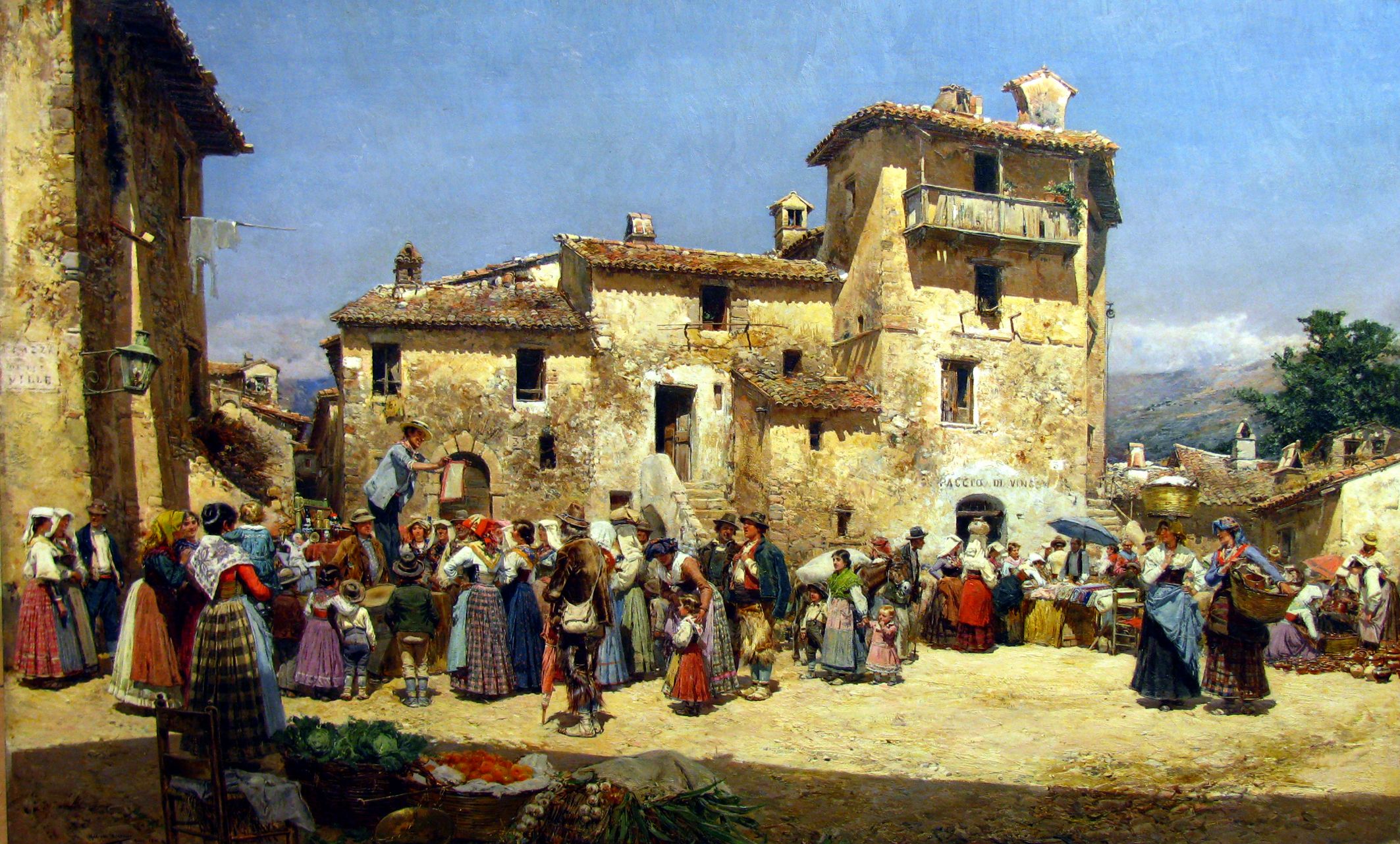
The featured image is “The Magician” (by 1924), by Mariano Barbasán Lagueruela, and is in the public domain, courtesy of Wikimedia Commons.