THE US-UK special relationship is being undermined by the British Government’s lawfare against its own military personnel. So says David Petraeus, former US Army General and Director of the CIA.
Petraeus confirmed the claim that American leadership on both sides of the political divide, and within the military and intelligence services, believe the British Government has broken that alliance, which had been made days earlier by David Davis (Conservative MP and former trooper in 21 SAS) and Richard Williams (who commanded 22 SAS at the height of the counter-insurgencies in Iraq and Afghanistan).
‘The United Kingdom’s armed forces have long made an indispensable contribution to the defence of the free world,’ wrote Petraeus, ‘and they remain central to the multinational coalitions that Western democracies must form and sustain in an increasingly contested security environment.’
Military ‘effectiveness’ takes ‘investment in capabilities’ and ‘careful attention to the institutional and legal frameworks’, Petraeus noted. ‘Getting that balance right is essential if the United Kingdom is to remain a military power of consequence – and a reliable ally – in an increasingly uncertain world.’
Similarly, Williams identified ‘two things in my military lifetime that have changed the operating environment’. The first is budget cuts. ‘But much more important than that is that between 1998 and 2001, we brought into statute the British Human Rights Act, and without a carve-out for military operations.’
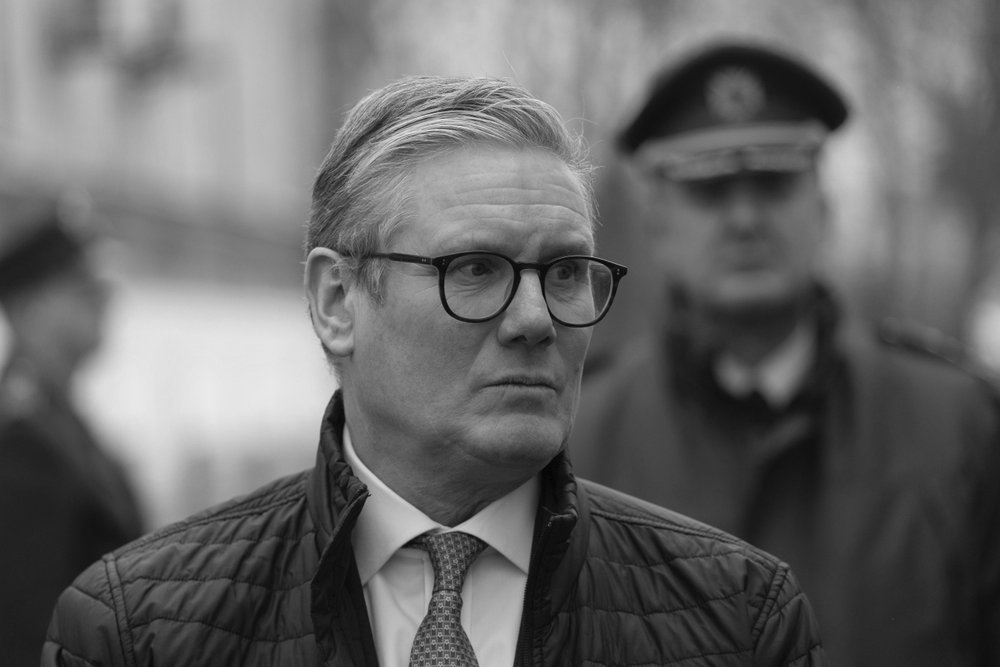
Sir Keir Starmer and Lord Hermer took leading roles in lawfare against UK personnel when in private practice before they became the Prime Minister and Attorney General. In 2007, they joined a third lawyer to intervene, pro bono, on behalf of Liberty and the Law Society of England and Wales to lobby Britain’s judiciary to re-examine the killing of Iraqis by British personnel.
The most junior of the three was Phil Shiner, whose firm, Public Interest Lawyers, generated thousands of complaints against UK personnel, partly by paying intermediaries to fabricate evidence. Shiner was struck off in 2017 and convicted of fraud in 2024.
Their argument was not derived from British law, Iraqi law, or military law, but from the European Convention on Human Rights (which is codified into British law by the Human Rights Act). Starmer’s submission includes the following slippery argument: ‘[Prior investigations] were perfunctory, lacking independence, and wholly inadequate. Any suggestion that they satisfied the requirements of Article 2 ECHR is unarguable.’
Starmer’s submission was dismissed by the House of Lords in 2007. Nevertheless, the then Labour government appointed Starmer as Director of Public Prosecutions.
From 2008 to 2013, Starmer presided over a Crown Prosecution Service that undermined sovereign immunity for British officials and military personnel on the basis that immunity undermines the ‘rule of law’. The CPS sought to re-open cases and raise conviction rates for military personnel accused of war crimes, and men accused of rape, including by hiding exculpatory evidence (a practice of which Starmer, incredibly, denies any awareness).
The most infamous case that the CPS under Starmer re-opened is known as ‘Danny Boy’ (after a British Army checkpoint in southern Iraq that was attacked in May 2004) or ‘Al-Sweady’ (after one of the Iraqis who claimed that soldiers from the Princess of Wales’s Royal Regiment tortured and murdered the attackers).
Although earlier reviews had raised doubts about the claims, Hermer re-presented the case, and the CPS launched a full public inquiry.
But its chair, Sir Thayne Forbes, concluded that the allegations were ‘deliberate lies’.
The Forbes inquiry ran from 2009 to 2014 at a cost to the taxpayer of about £24million.
The accused have endured:
· years under suspicion of war crimes
· repeated police interviews
· public vilification
· loss of employment and career prospects
· crippling legal expenses
· severe mental health consequences.
Veterans describe the process not as justice, but as punishment by investigation. None was compensated in proportion to what they endured. No one who made or championed the false allegations was meaningfully punished. No senior official was held accountable for allowing the cases to drag on for years despite evidence that they were baseless. Accusers, lawyers and activists faced no downside, and accrued lots of legal aid, for advancing false claims. Soldiers bore almost all the negative risks.
Their risks only worsened in 2011 when the European Court of Human Rights overturned the House of Lords decision of 2007.
The ECHR enables hundreds of investigations into British soldiers for supposed war crimes in both Iraq and Afghanistan, even where they followed rules of engagement and even though they were deployed on the orders of the Government and in agreement with the host country’s government (which granted foreign personnel immunity from local jurisdiction).
In 2013, Policy Exchange warned the Government that investigations into supposed violations of human rights were undermining Britain’s military capacity.
Brexit did not include the ECHR, although subsequent Brexiteer administrations did dampen the enthusiasm of public servants to persecute UK personnel.
Yet once Starmer and Hermer took power in 2024 they legislated to expand the criminal liability of UK personnel. They wish to repeal the Northern Ireland Troubles (Legacy and Reconciliation) Act of 2023, which grants immunity for those who co-operate with a reconciliation committee. They advance the Northern Ireland Troubles Bill, which removes the immunity.
On Armistice Day last year, nine four-star generals signed an open letter ‘to warn that the government’s Northern Ireland Troubles Bill, and the legal activism surrounding it, risk weakening the moral foundations and operational effectiveness of the forces on which this nation depends . . . Today every deployed member of the British Armed Forces must consider not only the enemy in front but the lawyer behind’.
Johnny Mercer, a former veterans’ minister, described Starmer’s actions as ‘shocking’ and said he was effectively stabbing troops in the back by offering free legal services to their accusers.
GB News also reported that the Government’s leverage of the ECHR poses a ‘threat to national security’.
Indeed, lawfare is one of the reasons that the military is shrinking in quantity and quality. By 2025, about 300 more soldiers were leaving than joining each month – a brigade’s worth each year.
The risks are highest for UK Special Forces (UKSF), who deploy most often and most widely, and are on first call for counter-terrorism.
A former SAS regimental sergeant-major says that ‘service with the regiment is maybe 10 or 15 years – and the rest of your life is being chased by lawyers’.
This week, Williams and Davis reported ‘an exodus of the most experienced personnel and a corresponding negative effect on attendance at the gruelling selection course’. One squadron within 22 SAS is below half strength. (The regular units of SAS and SBS count only eight squadrons between them.)
A decline in the Special Forces has more impact on the special relationship than a decline in any other UK force.
That’s because UKSF are the only component that matches US equivalents in both quantity and quality. SAS and SBS are about equal in size to the US Army’s Delta Force and the US Navy’s SEAL Team Six respectively. All these units are considered tier one, even within special operations forces. Like SAS, Delta selects from within the army, particularly airborne troops, while ST6 is selective within the SEAL teams.
Williams and Davis have said that US ‘special operations forces may increasingly move away from working with British Special Forces and towards partners they see as more politically reliable and operationally unconstrained’.
According to Williams and Davis, ‘some US special operators – themselves held accountable to the highest legal standards – are now asking whether what remains of UKSF can be trusted to fight, given the debilitating hand of misapplied UK human rights law. Far better to go it alone, they say, than take the risk of hesitations on target or being pulled into UK-generated, post-operational lawfare’.
The US principals whom Williams and Davis met in Washington ‘made it clear that America is now considering withdrawing the invitation to participate in and benefit from this combined military machine’.
Intriguingly, Williams and Davis observe that ‘it has reached such a point where we would not be surprised to hear that the US has conducted a counter-terrorism operation on British territory without telling the UK about it’.
Petraeus offers a solution. Britain needs a single constitutional text, including a consolidated bill of rights, for many reasons articulated previously, including to protect its military personnel from its own government.
Petraeus points out, gently, that the US ‘has generally maintained a clearer distinction between the law of armed conflict and domestic constitutional protections in the context of overseas operations. That distinction has helped preserve clarity for commanders while still ensuring accountability through military justice systems’.
Perhaps the next government should constitute or legislate for sovereign immunity for personnel acting under and in conformity with the government’s orders.
This would not prevent personnel from being prosecuted for unlawful acts, such as torture, for which the government has issued no warrant.
But sovereign immunity would protect personnel from being prosecuted for an act ordered by the same government that will hound them through the courts for years after.