Image Credit: TN General Assembly
Tennessee Conservative News Staff –
Tennessee lawmakers passed legislation designed to keep students safe while using the internet in Tennessee schools.

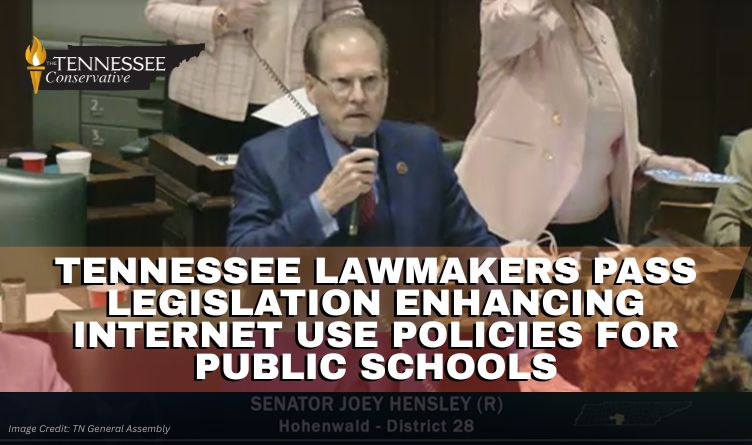
House Bill 1886 (HB1886), sponsored by State Representative Scott Cepicky (R-Culleoka-D64), and Senate Bill 1912 (SB1912), sponsored by State Senator Joey Hensley (R-Hohenwald-D28), will require school districts and public charter schools to review their acceptable use policies twice a year and make any necessary updates.
Policies must include the following:
- Internet safety protocols for students that are integrated into the school’s instructional program,
- Guidelines for effective communication with parents to raise awareness of internet safety,
- Rules designed to protect the safety and security of students who use the school internet to access email, chat rooms, or any other form of “direct electronic communication online”,
- Safeguards to prevent students from using the school internet to access websites, applications, or software that does not protect students against the use, disclosure, or dissemination of their personal information,
- “Select technology” that prohibits internet access to harmful content which is pornographic or obscene, overly violent or frightening for the student’ age or maturity level, has no educational value, or promotes self-harm.
The new legislation will allow LEAs to create email addresses for students grades 5 and below only for the purpose of identifying students in “security or grading software.” Students would not be allowed to access that email.

Additionally, if a student under the age of 18 accesses a website using the school internet which is in violation of the internet use policy, the school would be required to notify the student’ parent or guardian of the prohibited access.
The bill passed in the House with 75 ayes and 16 nays. After the Senate substituted the companion House bill, the legislation passed unanimously through that body.
The legislation will go into effect on July 1, 2026.