When the love of God strikes a human heart, it strikes it as a simple ray of light strikes a prism. Just as that light is then diffused and transformed into all the colours of the spectrum, so the love of God is diffused and transformed into all the virtues and gifts that are needed as the believer seeks to acquire them.
 I was born, and brought up, like us all, in the aftermath of the Renaissance, influenced by a spirituality that owed as much to the rise of humanism as to the Gospel of Jesus Christ. As I have already said the Credo of humanism is “I believe in Man” the Credo of Christianity is “I believe in G od”. Naturally, I thought that if I were to attain the sanctity to which I aspired it would be primarily the result of my own efforts. I was in effect a Christian stoic, a Pelagian who had failed so comprehensively to make myself into the saint of my dreams that I was about to give up the spiritual life for good. It was then that I came across Pax Animae, written by a Spanish Franciscan in 1588. It was a spiritual gem untouched by the spirit of humanism. Reading it was the nearest I came to a Damascus Road experience. It immediately enabled me to see that I had been misled into believing that I could be the architect of my own perfection. Its very first paragraph showed me why I had failed and what I ought to do to succeed.
With love you may bring your heart to do whatsoever you may please. The hardest things become easy and pleasant, but without love you will find anything not only difficult but also impossible.
In short, with love all things are possible but without love nothing is possible. The rigorous asceticism that I adopted to make myself perfect did nothing but exhaust me. Now I could see that I would achieve nothing without coming to know and experience the same love that animated the man I wanted to emulate more than any other. We make the same mistake with Christ as we do with the saints. We read their lives backwards. We read about their rigorous lives, their superhuman sacrifices, and their heroic virtue, and we believe that the only way we can be like them is to do likewise. If we would only read their lives forward instead of backwards, then we would see that they were only capable of doing the seemingly impossible because they first received the power to do it in prayer. If we try to be and do what they did without first receiving what they received, then our brave attempts will inevitably end in disaster. True imitation of Christ or any of his saints means firstly copying the way they did all in their power to receive the Holy Spirit who inspired and animated them. That is essentially all we have to do. That is why the spiritual life is so simple, if only we had the simplicity of a little child to see it.
I needed a new type of asceticism that would not dissipate my energies trying to do the impossible, but which would enable me to do the “one thing necessary”. I needed to gather what little resources I had to create quality space and time in my daily life for the profound prayer that would give me access to the same love that filled Jesus Christ and inspired everything that he said and did. I knew that this love would have to be experienced if it was going to give me the inner security that would alone do for me in some small measure what it did in full measure for Christ. I had a new asceticism with which to substitute for the old, and I called it the “asceticism of the heart”. Asceticism for the beginner, then, is quite simple. Do not give up anything you like or enjoy except when it prevents you from giving quality space and time to God in prayer each day. If you think it is too easy, then try it and stick to it, and you will soon find it is not quite as easy as you thought. So do not let first enthusiasm fool you into heroics that you will never sustain. Now, when you have persevered for long enough, you will gradually begin to receive and then experience the love that will enable you to do what is quite impossible without it. But first things first, if you are going to have, not just time, but quality time for prayer then you must learn how to prepare yourself for it.
Whenever you watch any sport at the highest level, you cannot but be impressed with the dedication of the participants. It is the quality of their single-mindedness that draws the attention. The moment they begin their preparation, it is as if they enter into a time-free zone where they are able to put everything out of their minds in such a way that they can live and act fully in the present. If they allow anything from the past to disrupt their concentration, then it is instantly dismissed. Nor must anything from the future disturb them either. Just a few moments’ indulgence imagining themselves receiving their trophy or celebrating with their friends could mean losing their prize. It should be exactly the same with preparation for prayer. We need some sort of countdown to help us drop out from the hectic life that is so often forced upon us, to prepare to turn on and tune in to God. Just as different athletes find their own rituals, we need to find our own. It may simply be lying down for a rest, reading some spiritual or inspiring book, exercising, going for a swim, listening to music, or whatever helps to relax us. This is all part and parcel of the asceticism of the heart that is going to help us enter into that time-free zone when we begin to pray. It is here that we can first begin to enter, as fully as we can, into the present moment, by ridding ourselves of anything from the past or the future that can draw the attention away from fixing our gaze fully upon God. This is the only place on earth where time can touch eternity.
In order to sanctify this place and consecrate it to God, the early monks first practised private confession so that no past guilt would disturb them. They even confessed the temptations that might induce them to desecrate holy ground by inducing them to live in the future. God cannot be encountered in the past or in the future but only, as de Cassaude saw so clearly, in what he called the “sacrament of the present moment”. That is why he said that “The present moment is always full of infinite treasures. It contains far more than you have the capacity to hold.” This is the only moment when time touches eternity, and prayer is the offering that makes it a holy place, where the human and the divine first meet, mix, and mingle before being united.
The trouble is that the spiritual life seems to have become so complicated over the years that you almost feel you need a couple of degrees in theology just to understand it before you can even attempt to live it! Yet it is essentially simple, so simple that you need the simplicity of a little child to see it. You see, there is only one thing that is necessary, and that is love. Not our love of God, but his love of us. In other words, Christianity is firstly a mysticism not a moralism. It is not primarily concerned with detailing the perfect moral behaviour that we see embodied in Christ’s life and then trying to copy it virtue by virtue. That is stoicism, not Christianity, and it is doomed to failure. Christianity is primarily concerned with teaching us how to turn and open ourselves to receive the same Holy Spirit who filled Jesus Christ. The more we are filled with his love, the easier it is to return it in kind, as the divine suffuses and then surcharges human love so that it can reach up to God and out to others. Then and only then are we able to “love God with our whole hearts and minds and with our whole beings and to love our neighbour as Christ loves us”. Then, when we begin to practise the first of the new commandments in, with and through Christ, everything else in the spiritual life falls into place.
When a person falls in love and begins to experience being loved, then there is nothing they would not do, nor any sacrifice they would not make for their lover. In fact they positively look for things to do, the harder and the more exacting the better, to enable them to show the real quality of their love. What was impossible to self-centred egotists only a short time before becomes not only easier but also their greatest pleasure. It is exactly the same in the spiritual life. The exemplary behaviour, the extraordinary self-discipline and the heroic sacrifices made by a person who begins to experience the love of God are not the results of an arrogant stoic trying to make themselves perfect.
They are the actions of someone desperate to express their love in behaviour that could not be maintained for long without the love that sustains it. All the little pleasures and pastimes that were thought indispensable before suddenly become dispensable, and with the greatest of ease, virtues that were noticeable by their absence before, are born of the love that envelops them. When the love of God strikes a human heart, it strikes it as a simple ray of light strikes a prism. Just as that light is then diffused and transformed into all the colours of the spectrum, so the love of God is diffused and transformed into all the virtues and gifts that are needed as the believer seeks to acquire them. In short, first seek God and his Kingdom which is love, and everything else you want or desire will be given to you.
___________
This essay is chapter sixty-five of The Primacy of Loving and is published here by gracious permission of the author.
The Imaginative Conservative applies the principle of appreciation to the discussion of culture and politics—we approach dialogue with magnanimity rather than with mere civility. Will you help us remain a refreshing oasis in the increasingly contentious arena of modern discourse? Please consider donating now.
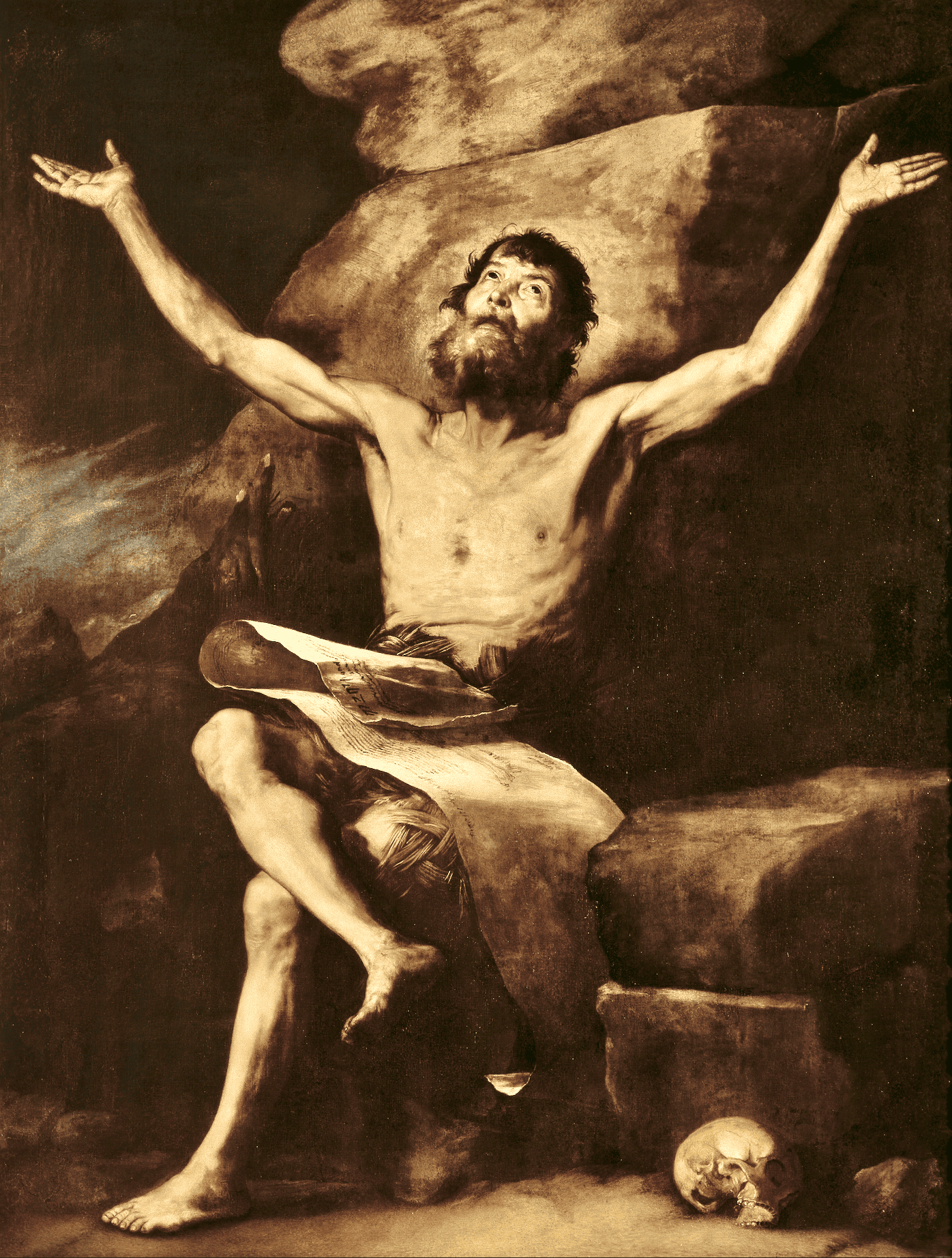
The featured image is “St Paul the Hermit” (1644), by the workshop of Jusepe de Ribera, and is in the public domain, courtesy of Wikimedia Commons.