In this selection of earlier articles, I have put together a couple of Notes from the Sticks with a Sheep of the Week and a Wheels of the Week.
***
Snails – a life-long love (first published on March 17, 2024)
I HAVE grown so used to the ignorant drivel spouted by lobby groups with ‘Natural’ or ‘Wild’ or ‘Green’ in the title (for example the recent ludicrous claim by 82 outfits that the countryside is ‘racist’) that it comes as a real shock when they say something sensible.
Last week there was one such rare occasion when the Wildlife Trusts and the Royal Horticultural Society launched a campaign on behalf of snails and slugs called ‘Making friends with molluscs’. The literature quite rightly says that slugs and snails do far more good than harm. There are about 150 varieties in Britain and only a few are garden pests. On the credit side they eat dog mess and other animal dung, rotting vegetable matter and carrion. They are also food for a wide variety of other wildlife including hedgehogs, thrushes, frogs and toads.
I’ve been a gastropod (gastro=stomach, pod=foot) fan all my life and I recently dug out this picture taken by my father when I was six or seven at Beadnell, Northumberland, where we spent family holidays.

My companion is a garden snail. (At that time it was known as Helix aspersa but has been renamed Cornu aspersum. What fun it must be on a nomenclature committee.)
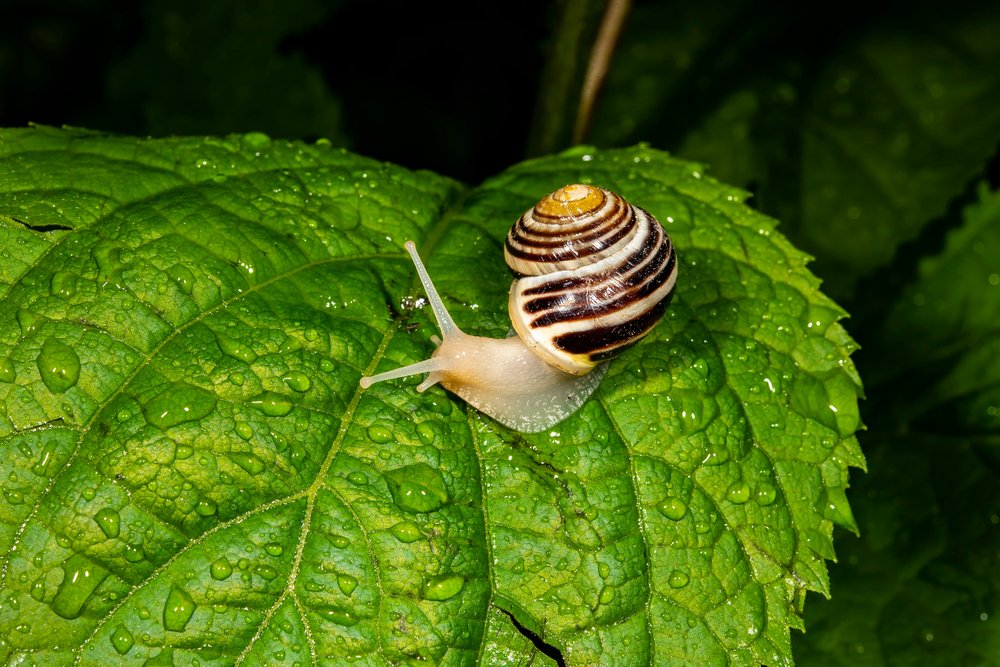
I used to collect them every morning then let them go again. I expect they got a bit fed up with being picked up every day. After we moved south, we took our holidays at Dymchurch on the Kent coast, where I could find the pretty Brown Lipped and White Lipped snails which come in many colours and stripes (closely related but distinguishable by the colour on the rim of the shell).
Below is a Brown Lipped snail (Cepaea nemoralis) which I photographed near our Lancashire home last year.

This is a stock picture of a White Lipped snail (Cepaea hortensis).
Later my kind dad built me some snail houses, open to the ground, and I kept some Roman snails (Helix pomatia) which at that time (1950s) were quite common in the hilly scrubby area south of Croydon (Kenley, Whyteleafe etc, probably covered with houses long since).
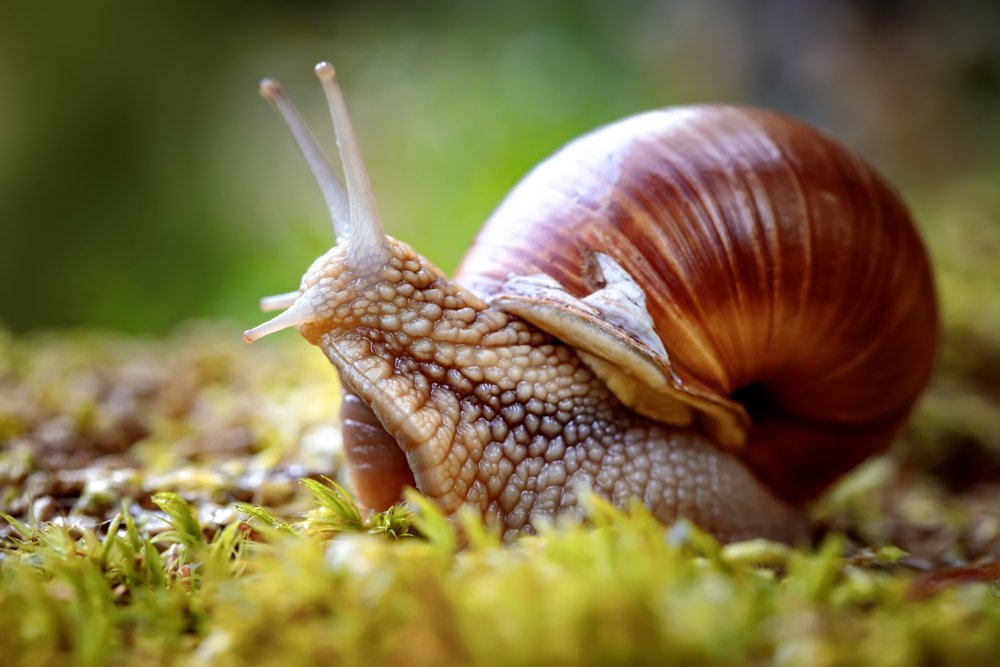
They are now very rare in Britain and are protected by law, so you may not take them from the wild if you are lucky enough to find one. They must be four times the size of the garden snail, and I regret to say that this is the type of snail which is eaten.
How to get along with slugs (first published on May 9, 2021)
I HAVE always been fond of slugs (and snails, but I will do them in another blog). I believe I have the world’s largest and finest collection of ornamental slugs.
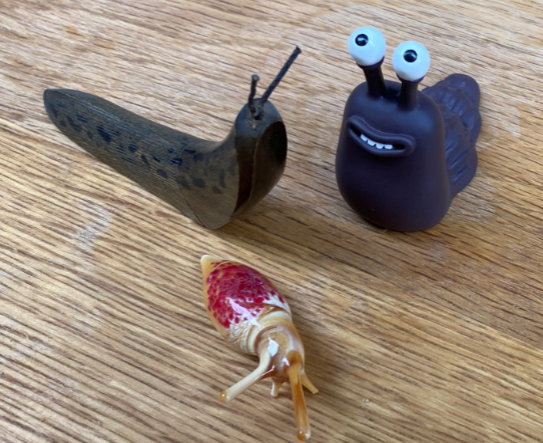
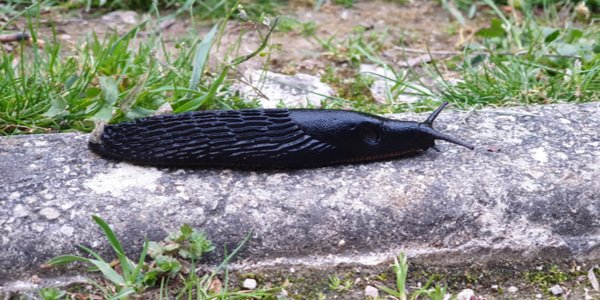
One of my earliest memories concerns slugs. I must have been about six. My grandparents lived in a Victorian house in Huddersfield divided into flats. They had the downstairs and my aunt and her family originally had the upstairs, but by this time they had moved out and the upstairs flat was empty. One afternoon there was a big family gathering and while the grown-ups were nattering, my cousin Wendy, then aged about four, and I went upstairs. We found a big toy truck that had been left behind and it seemed a good idea to take it outside. It had been raining and the ground was covered with big black and orange slugs, probably Arion ater:
and Arion rufus:
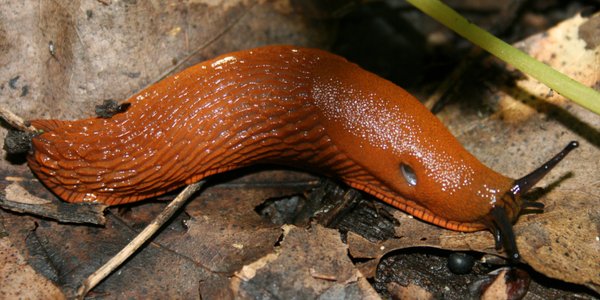
Arion rufus in particular has a habit of swaying if disturbed. I wonder why?
Anyway, Wendy and I spent a happy time collecting as many slugs as we could pile into the toy truck then we took it upstairs to play with them. When we were called down for tea we forgot about the slugs, probably until it was time to go home. At that point someone went upstairs and found the slugs had made their way all over the empty flat. I can’t remember what happened next but I imagine they weren’t very thrilled. Apart from anything else those big slugs are intensely slimy – it is almost impossible to get off your hands.
Slugs have a terrible press, mainly because they eat garden plants. So I would like to put in a good word for them.
First, where do you think dog mess and other excreta goes if is not cleared up? Much of it is eaten by slugs, particularly the large ones. OK, it is not a very charming thought, but would you want to do it?
Second, there are about 40 types of slug in the UK and only a few damage garden plants. The rest eat dead and decaying vegetable material. As I said in this post on moles, I am not in favour of killing things for cosmetic reasons, and there are ways to live with slugs.
I have gardened for many decades without ever resorting to slug bait, partly from principle and partly because we have always had various pets that might have helped themselves to it. I have found there are a great many garden plants that slugs don’t touch, far more than the ones they do like. When I see a wonderful display of delphiniums or dahlias, I fear my main reaction is to imagine the masses of killer chemicals that have poisoned the soil to achieve the effect. Examples of plants that slugs take no interest in are perennial geraniums, day lilies, crocosmia, leucanthemum, almost anything with grey leaves, Japanese anemone, ferns, euphorbia, penstemon, alchemilla, roses – you can find long lists on the internet. (How helpful it would be if plant retailers told you which plants are susceptible to slugs but they never do.)
In recent years I have discovered a miracle – copper tape. I have never been able to grow hostas, which I love, in the ground, but thanks to the tape I can grow them very well in pots. Here is a picture I took yesterday:

(They were in a bigger pot which broke in the frost so I hacked off lots of roots and crammed them into this smaller pot, but they don’t seem to mind a bit).
Slugs are partial to lupins so I don’t normally bother with them. But nine or ten arrived free with some other plant order, so I thought I would bung them in a pot with tape. Lo and behold, they are growing like stink.

You can get copper tape pretty cheaply from the internet and it lasts a few years before it falls off. Two warnings: It is sharp so best to wear gloves while applying it, and be careful the pot is not close enough to anything else for the slugs to stretch over the gap (unlike in this picture!) It would probably a good idea to repot with fresh compost before using the tape as well, so that there are no small slugs or eggs lurking. With these precautions you and the slugs should be able to live in perfect harmony.
***
Sheep of the Week (first published on July 1, 2023)
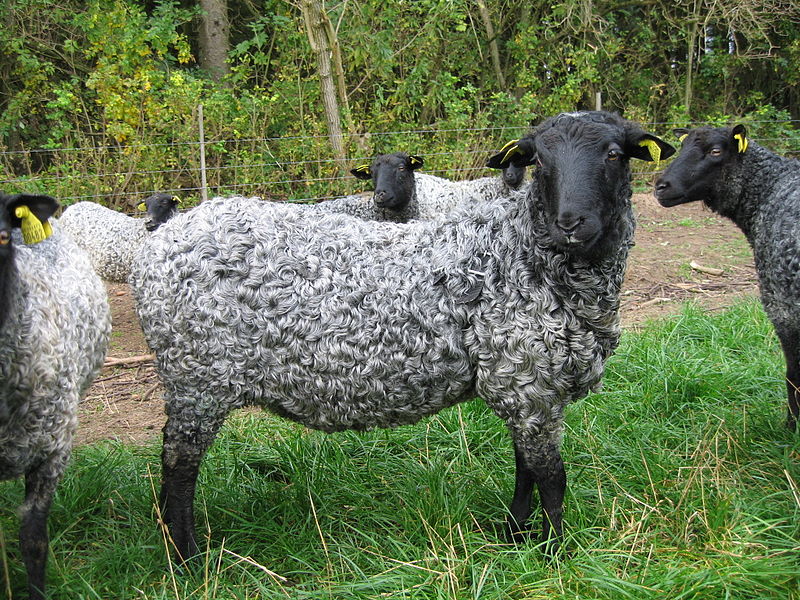
THIS splendid animal is a Gotland sheep. If you are a fan of Scandinavian crime fiction, you may have come across the breed’s home island of Gotland, off the south-eastern coast of Sweden, which features in at least 21 novels (you can see a list here).
The breed was developed by the Vikings who crossed the island’s native horned Gute sheep with Karakul and Romanov sheep brought back from expeditions into Russia. There are still some Gutes on Gotland:

These are Karakuls:

And these are Romanovs:

In the 1920s the breed was refined to produce a multipurpose long-wool sheep, yielding good flavoured close-grained meat, furskins and soft silky lustrous fleece, called Gotland Peltsheep. In Britain they are known simply as Gotlands.
They arrived here in 1972 when Donald Macdonald imported a flock of 110 to provide skins for his Antartex sheepskin coat business, as you can read here. For a while this was a highly successful enterprise but try as I might I cannot find out what happened to it, except that I think it was taken over at some stage by Edinburgh Woollen Mills. You can still find the vintage coats for sale at very reasonable prices, such as this one.
I cannot discover if the late sports commentator John Motson wore Antartex but I think it’s a good bet that he did – see here.
By 1983 Gotlands had spread to ten breeders in Britain and the first flock book was published. There are now about 40 flocks in the country, concentrated in south-west England. The breed is described as ‘a bright, active and friendly sheep full of curiosity’, and the fleece is beautiful.

As far as I can see the skins are mainly used as rugs these days, like this one (I have no connection with this or any other company selling them):
Here are some lambs having a good time.
You can read more at the British Gotland Sheep Society website.
Wheels of the Week (first published on March 17, 2024)
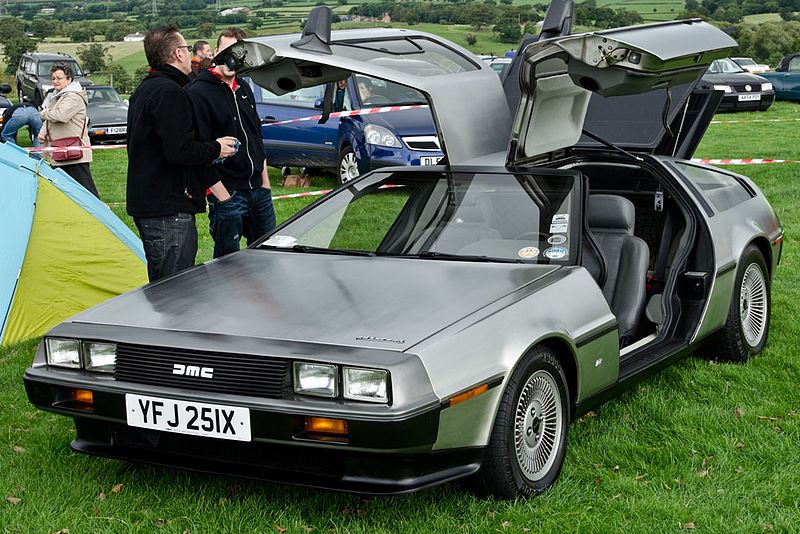
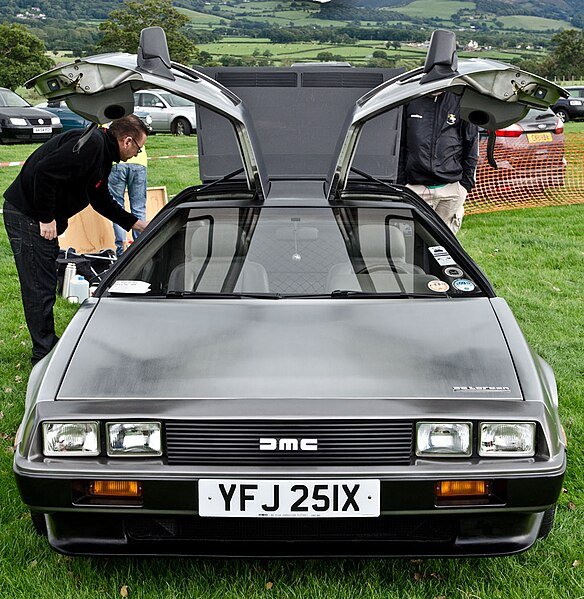
I CAN never decide whether the DeLorean is the most beautiful car ever made, or one of the ugliest. Either way it is sensational. I saw one at a motorway services ages ago and there was a crowd round it.
Here is one manufactured in 1982 but not registered until 1988, 2800cc.
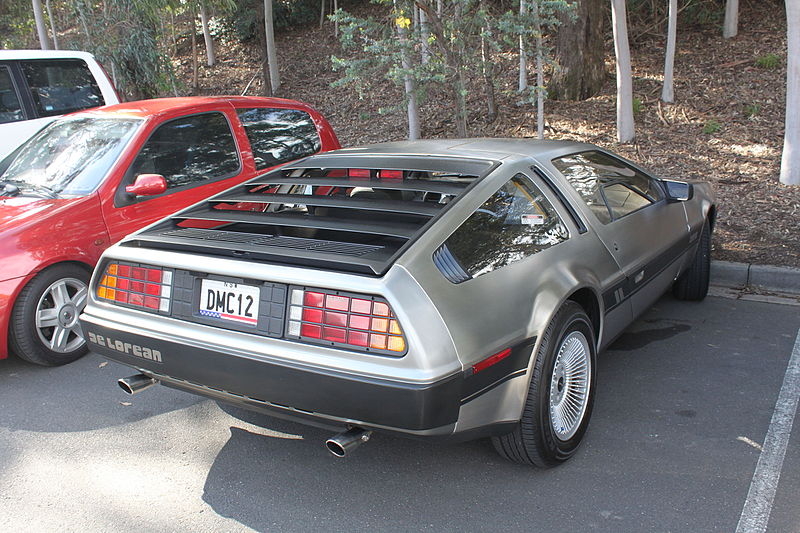
This is the back of another car.
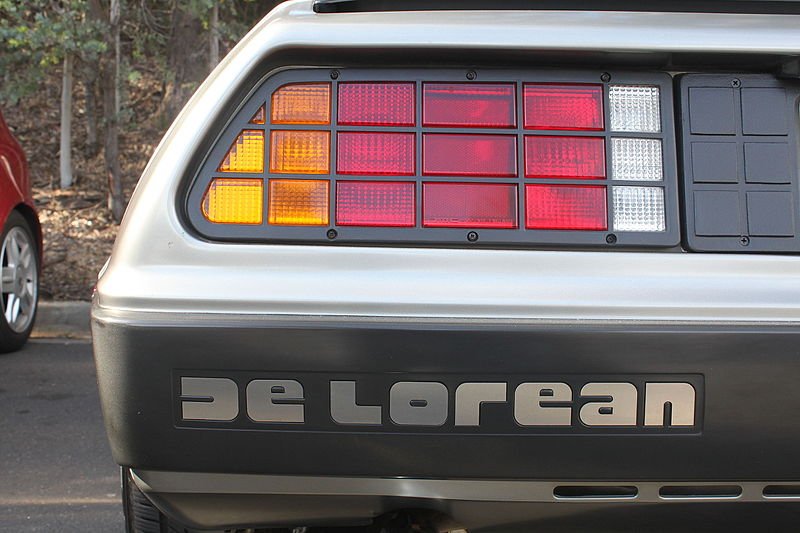
And the rear logo.
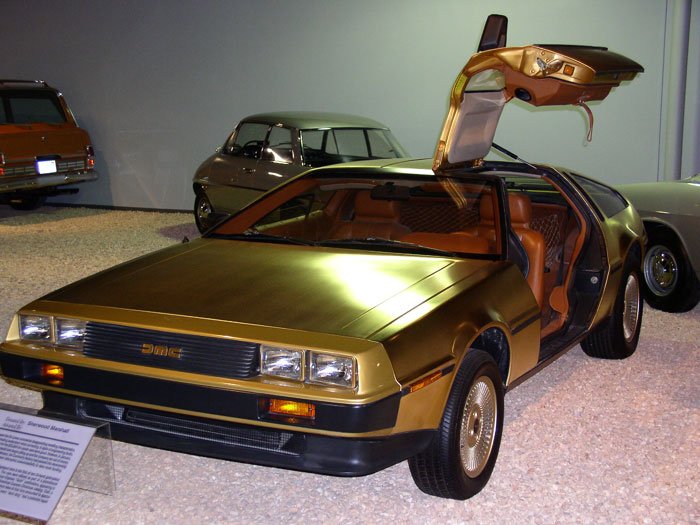
Five gold-plated models were produced. This one is in the William F Harrah Foundation National Automobile Museum in Reno, Nevada.
The DeLorean Owners’ Club has published a very useful potted history and here is an even more potted version, with thanks and acknowledgements. You can read the full account, with pictures, here. The car was officially called the DMC-12.
‘The DMC-12 is an example of a dream gone horribly wrong. Its story involves financial chicanery and mismanagement, British government embarrassment, broken employment dreams for thousands of workers in Dunmurry, FBI entrapment and the downfall of one of America’s brightest and most controversial engineers.
‘Only about 9,000 DMC-12s were ever built [I believe the precise figure is 9,530] with all but a handful shipped to the USA. The striking Giorgetto Giugiaro design and its stainless steel body panels and gull-wing doors were supported on a glass-fibre underbody and Lotus-designed Y backbone chassis.
‘The whole project was the brainchild of John Zachary DeLorean, former Senior Vice President of General Motors. He left GM in 1972 (the full circumstances have never been fully explained by either party) with a stated wish to build an ‘ethical sports car’.
‘In 1975 the DeLorean Motor Company was formed and JZD gained financial backing to have two prototype cars made. Later he looked for a place to build his dream machine. After looking at sites throughout the world, in 1978, JZD finally decided on Dunmurry, just outside Belfast. A deal was signed with the Northern Ireland Development Agency, who made large grants available to anyone brave enough to provide jobs in Northern Ireland during ‘the troubles’. This money [the sum was £120million] was provided by and underwritten by the then Labour British government.
‘DeLorean struck a deal with Colin Chapman of Lotus to re-engineer the prototypes for mass production. In January 1981 the first car came off the line.
‘All seemed fine for a few months, with shipments of cars sent to America, where they were eagerly awaited by the dealers and customers alike. Even the motoring press initially gave them a warm reception. However by the summer of 1981 some quality issues were noted and received a bad press and America was heading into a recession, making expensive two-seater cars less desirable. With hundreds of unsold cars stacked up on both sides of the Atlantic the logical thing to do was to drastically cut production, but DeLorean gambled that if he kept the employment/ production rates up, the British Government would not dare refuse him yet more money to carry on. Unfortunately he had not reckoned with the ‘Iron Lady’, Margaret Thatcher, who was unwilling to sign blank cheques for DeLorean.
‘In 1982 the factory went into receivership, but the receivers were hopeful that the business could be salvaged. DeLorean went on a whirlwind world tour desperately trying to raise the necessary funds. He kept indicating that a new deal was about to be concluded, but the money never materialised. Eventually a group of former senior factory managers got a deal together that would save the factory.
‘All the contracts were ready to sign; the money and backers were in place . . . they were all sitting around awaiting a promised phone call from John DeLorean. What they got instead was a shaky black and white TV image of DeLorean in a hotel bedroom, comparing a suitcase full of cocaine to gold and toasting those present for making it all possible. Then the FBI walked in and arrested him.
‘DeLorean was allegedly taking part in a multi-million-dollar cocaine deal to rescue the company. He was eventually acquitted on the grounds of entrapment, but it was much too late; the damage was done. The money men had already walked away, the factory was liquidated, the dream had ended.’
The car was planned to sell for $12,000 (hence the 12 in DMC-12) but in the event the price was $20,000. The DeLorean Owners’ Club, naturally, does not emphasise the shortcomings of the car but to summarise, the build quality was seen as poor and the performance disappointing. In 2017, Time magazine included the DeLorean in its list of the 50 worst cars of all time.
In 1985 it featured in the film Back to the Future, and later its two sequels. Here is a video of all the scenes in which it appears.
DeLorean died in 2005 at the age of 80. It is estimated that 5,000 of his cars survive.
If you would like to buy one, there are a few on the market. Here are three, including a (presumably rare) right-hand-drive model (they were built as LHD but some were converted to RHD) at prices ranging from £50k to £65k.
In 1995 a new DeLorean Motor Company, unrelated to the old, acquired the former manufacturer’s remaining parts inventory and registered its stylised DMC logo trademark. In 2022, the company announced it was entering production on an electric car, the DeLorean Alpha5, which is supposed to do 0-60 mph in 2.99 seconds and have a top speed of 155mph. We shall see.