THE UK Health Security Agency (UKHSA) has announced there were an estimated 1,504 heat-associated deaths in England last summer, apparently lower than they had forecast.
‘What heat-associated deaths?’ you might well ask. I doubt whether any death certificates recorded heat as the cause of death. And how can they be so certain that the number is 1,504, and not 1,503 or 1,505?
Strangely, the UKHSA have been publishing these statistics only since 2024. One might therefore reasonably presume that this is just another scare story to sell Net Zero. After all, they never publish excess death statistics for spring and autumn when the death rate is much higher.
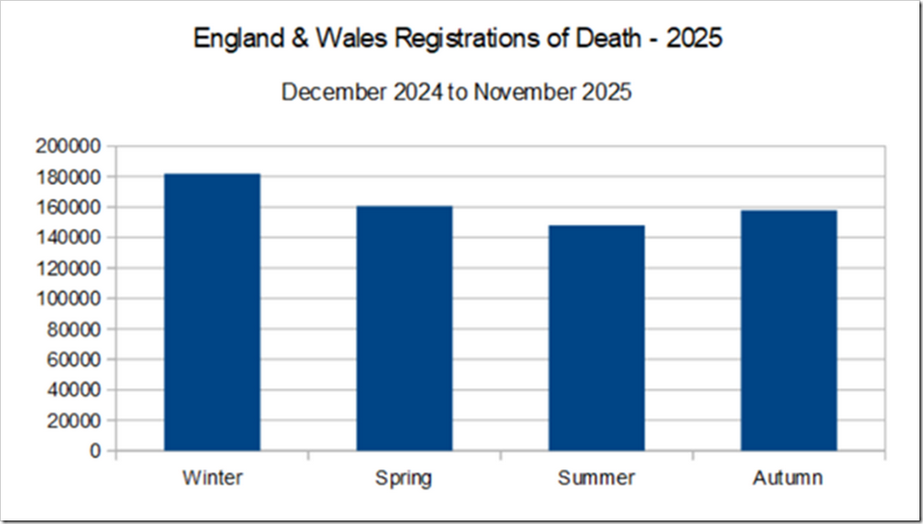
Weekly figures show a steady decline in deaths throughout the summer. The table below is compiled from ONS weekly registration of deaths data (bear in mind that registration is around a week after the date of death). As weekly registrations are affected by bank holidays, I have calculated averages per working day, ie excluding bank holidays:
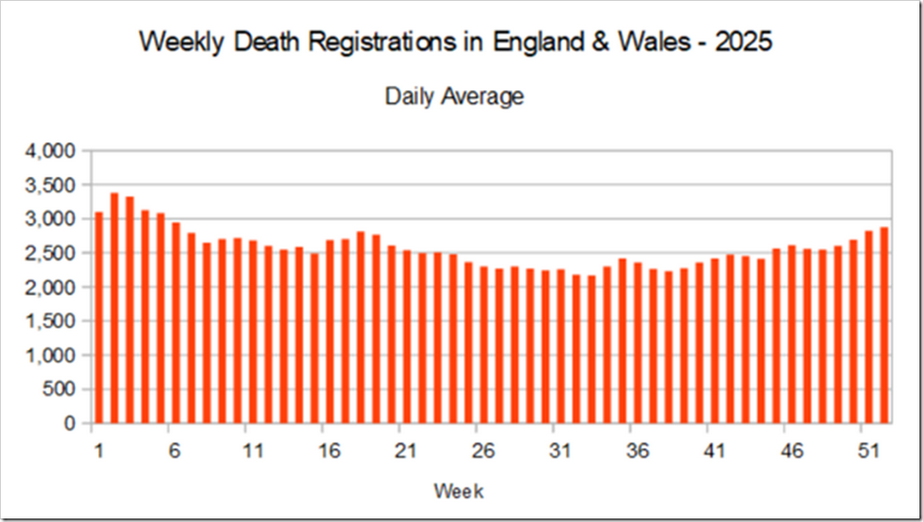
There is a little blip upwards in Week 18, w/e May 2, which almost certainly is a catching up of the backlog over Easter. Another blip in Week 35, which included the August bank holiday, is probably due to extra registrations crammed into the four-day week. But the overall trend is unmistakeable. From the end of winter onwards, there is a steady uninterrupted decline in daily deaths, until they resume their upward trend in the autumn.
So where do the UKHSA get their number from? Having identified a ‘heat episode’, they explain: ‘The up-to-28-day baseline period for each heat episode is then identified, comprising the 14 non-episode days before and 14 non-episode days after, up to a maximum of 28 days away from the heat episode. The estimate of observed heat-associated mortality for each heat episode is calculated as the difference between average daily deaths during the heat episode and average daily deaths during the baseline period, multiplied by the number of days in the heat episode.’
The Office for National Statistics, ONS, has looked at this topic in great detail on more than one occasion. In their most recent study, they looked at the scorching summer of 2022. Their findings were absolutely clear:
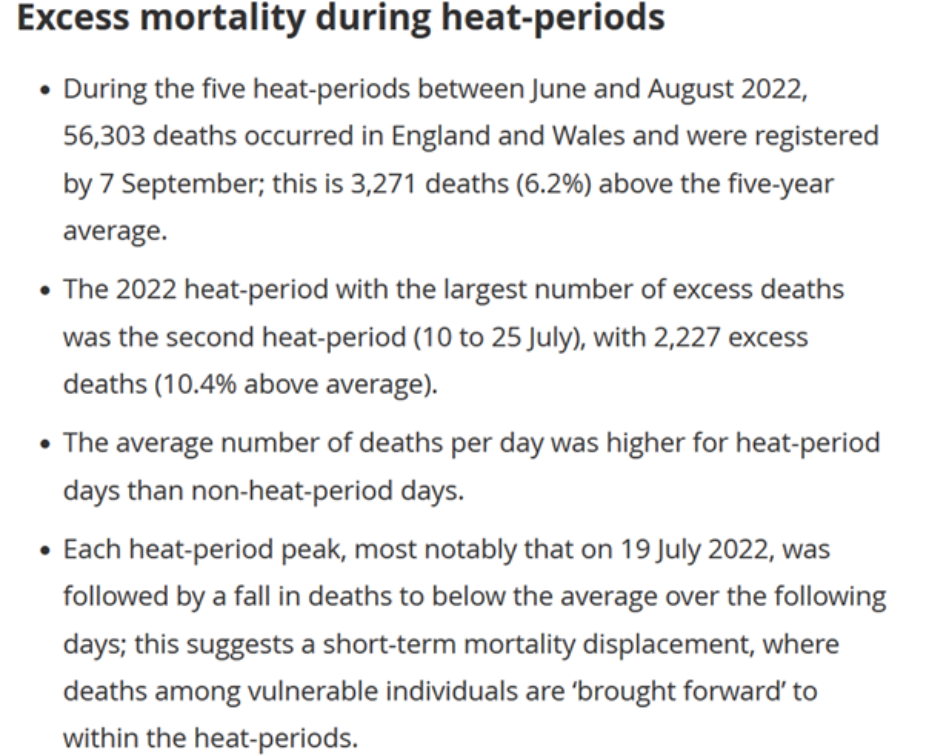
In short, people who were already close to death died a few days earlier than expected. It was not the heat that killed them, but their underlying disease. As the UKHSA admit, the recorded cause of death in these cases was typically circulatory disease, cancer and dementia. The heatwave did not kill them any more than an April shower or a cold winter’s day.
To make matters worse, the UKHSA methodology doubles down on their estimating, because they are comparing against the following 14 days when death rates are lower than normal.
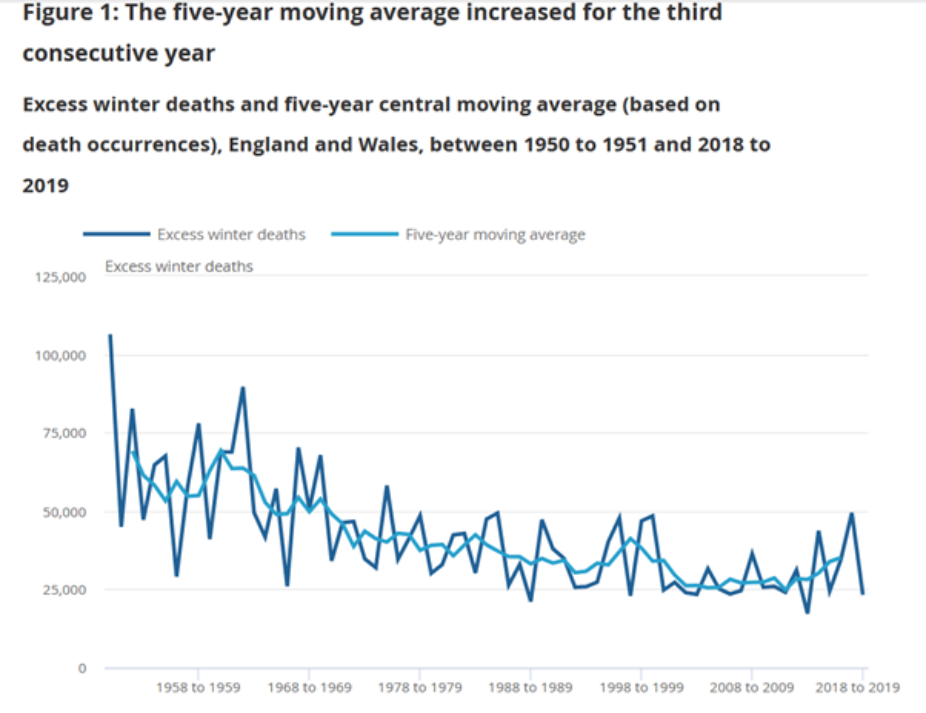
Far from people dying because of heat, far fewer die in summer than at any other time of the year. It is cold that kills, not heat. According to the ONS, excess deaths between October and March range from 25,000 to 50,000 in some years:
Next week, I’ll report on an even bigger scandal concerning a cover-up of excess deaths.