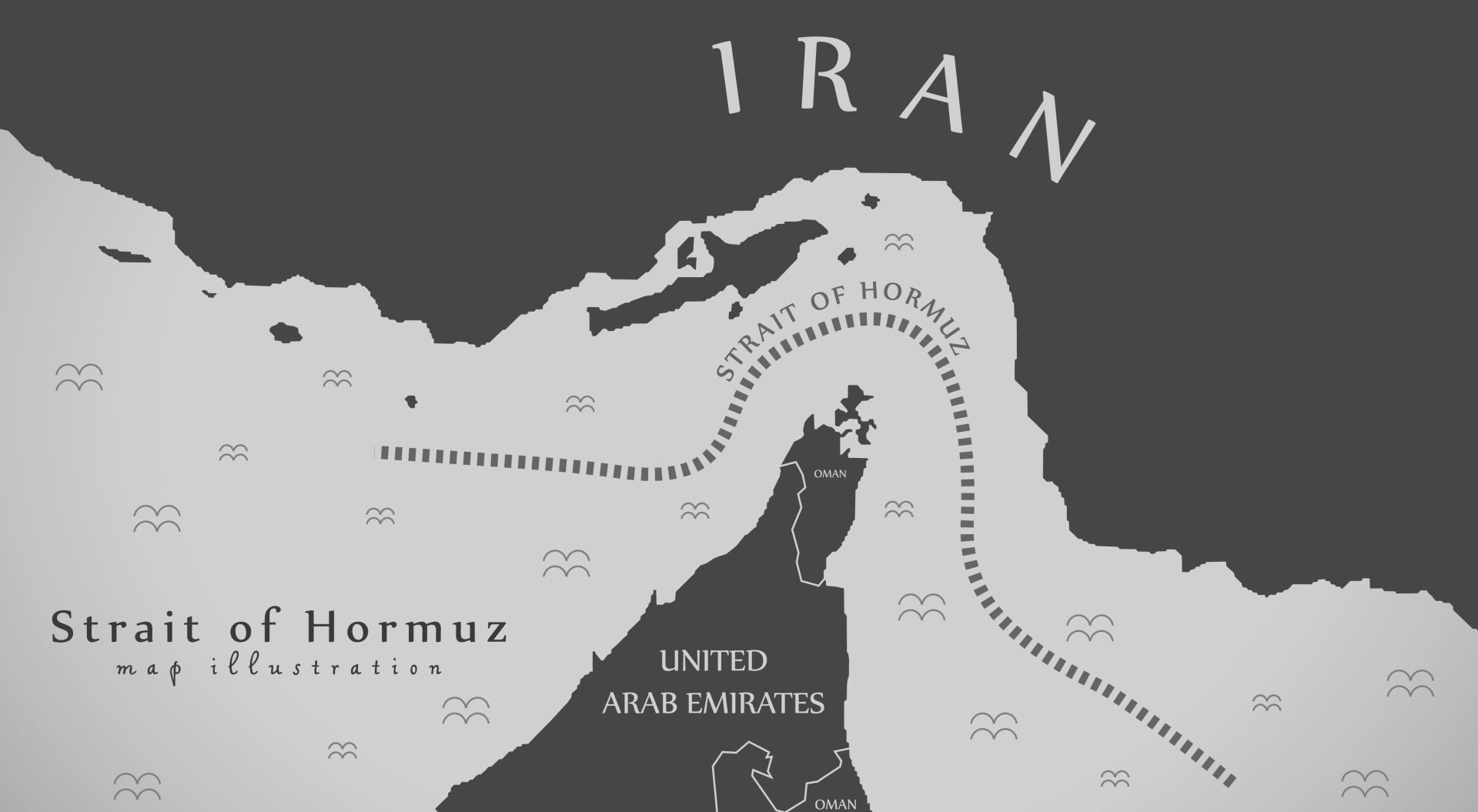
ON Sunday, President Donald Trump ordered a blockade of the Strait of Hormuz after Iran continued to levy tolls on commercial ships and refused to compromise during negotiations in Pakistan. It is meant to choke Tehran into lifting its own restrictions on the Strait of Hormuz. The Telegraph asks will it work and can it be enforced? I argue that it has to and must be.
The waters of the strait include two internationally-agreed lanes (one into the Persian Gulf, one out to the Oman Gulf). Iran acted unlawfully in closing the strait; a disproportionate response to US and Israeli airstrikes since February 28. It dropped mines in the channels and launched missiles and drones at neighbours and ships. Then it implemented a toll system requiring some cargo ships to pay between $1million and $2million to pass through the strait, often forcing vessels through, or near, Iranian-controlled waters. This ‘Tehran toll booth’ has forced some tankers to pay millions to leave the strait.
Every one of Iran’s actions is illegal under the UN Convention on the Law of the Sea. It cannot claim any of the caveats under the laws of war, such as self-defence or proportionality.
Even after the ceasefire was announced, Iran continued to bombard its neighbours and to levy fees on shipping. Now it claims to have lost the locations of its mines in international waters.
Iran is using the strait to trade oil and armaments with Russia and China in defiance of international sanctions. Its closure of the international lanes helps it to discriminate. Three Chinese supertankers passed through the Strait of Hormuz at the weekend. It is, as the Institute for the Study of War has described it, a ‘protection racket’.
On Sunday Trump, who has condemned Iran’s behaviour as extortion, threatened to hit China with 50 per cent tariffs if he finds evidence of Chinese exports of weapons to Iran.
The G7 (Canada, France, Germany, Italy, Japan, UK, US), who have agreed to re-open the strait after the war, had already declared Iran’s attacks on commercial traffic as unlawful.
In fact they would be within their international rights to re-open the strait while the war continues – righting a wrong, acting in self-defence, acting proportionately. Iran’s intransigence in negotiations, which collapsed after 21 hours of discussions without a deal on Sunday, adds to that legitimacy.
‘Iran never won a war, but never lost a negotiation,’ Trump tweeted in 2020, repudiating most of what Barack Obama’s administration had conceded to Iran in 2015 (including enrichment of uranium). Iran however remained complacent until 2025, when the US joined Israel in air strikes on Iran’s nuclear programme. The strikes since February 28 have been much greater in scale and better targeted.
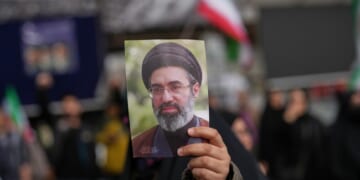
Iran’s supreme leader Ali Khamenei was killed on the first day. The regime’s replacement, his injured son Mojtaba, hasn’t been seen in public since and dozens of principals have been killed in airstrikes, including the chief of intelligence. Iran’s warships, warplanes, and missile launchers have been reduced by about two-thirds.
The losses are not so great as to render Iran incapable of bombarding neighbours and ships, or even shooting down two US warplanes. Nevertheless the regime is seriously weakened, caught between incapacity and intransigence. It continues to choose intransigence.
I predicted that the regime would not keep to the ceasefire or compromise, given its belief in its own rhetoric and fear of showing weakness to its restive citizens.
That was before Iran sent a delegation of more than 70 men, with departmental interests from economics to military, to negotiate with the US, only to repeat its wartime demands for reparations, national control over the international channels, continuing enrichment of uranium, a permanent ceasefire – adding more demands, dropping none. The delegation left Islamabad with nothing. The Trump administration called Iran’s bluff.
While Iran’s excuses were unconvincing and laced with threats, US Vice President JD Vance simply told reporters in Islamabad before departing for Washington: ‘They have chosen not to accept our terms,’ adding, ‘I think that’s bad news for Iran much more than it’s bad news for the United States of America.’
Trump posted that ‘most points were agreed to, but the only point that really mattered, NUCLEAR, was not’.
If Iran cannot compromise on its nuclear programme, why would the US agree peace after joining two wars in nine months to stop that nuclear programme?
Trump’s response, declared on Truth Social, was that the US military would block ships from entering or leaving the strait, and ‘interdict’ any vessel that paid tolls to Iran. According to US Central Command however the blockade will be enforced ‘impartially against vessels of all nations’ permitting ships to transit the strait between non-Iranian ports.
The blockade started on Monday at 10am US time. A US-sanctioned Chinese tanker has already passed through the vital oil artery, the first vessel to exit the Gulf since the US military began this maritime siege. Other Iran-linked tankers are also transiting the waterway, ship-tracking data show, but none are docking at Iranian ports and therefore are not covered by the blockade. A second round of talks is reported as ‘possible’.
The question remains whether the US can re-open the strait at a popularly acceptable cost and time. Retired US Vice-Admiral James Stavridis believes the operation will need two aircraft carrier groups, and about two dozen warships.
‘You’d want to bring in the Emirati Navy, the Saudi Navy, so you try and bottle it up on both sides,’ he said, for what he describes as a big task and a big gamble.
Trump has promised that other countries will be involved with the blockade, and once again has expressed his disappointment with Keir Starmer for refusing to support it.
Trump has reason. The international community needs to co-operate in reopening the strait, otherwise Iran will believe it can unlawfully close it any time it wants. With everybody suffering the costs, whether at war or not.