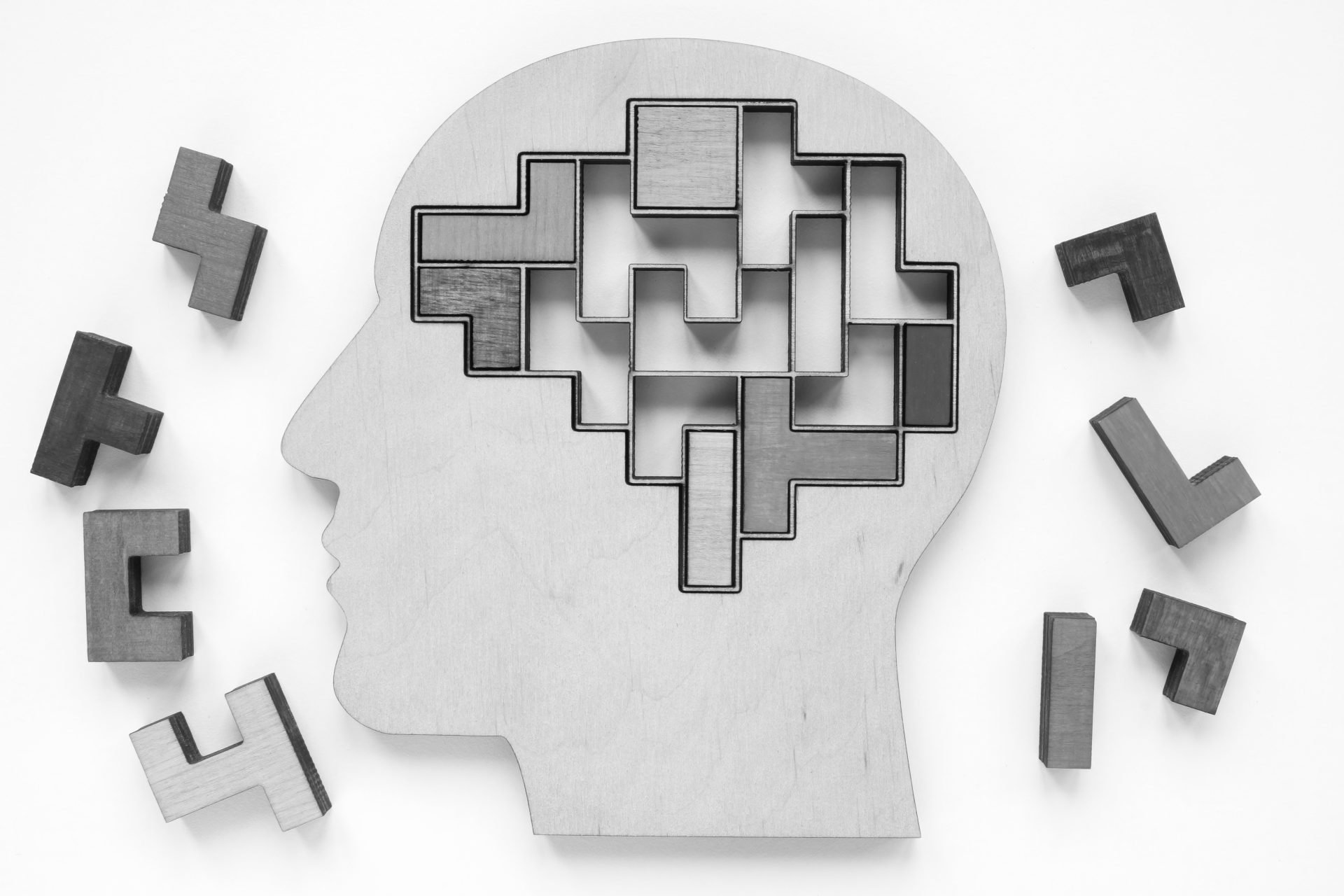
More than a century ago, doctors carefully documented the histories and symptoms of children who developed normally before suffering devastating developmental regression. Today, those histories have largely disappeared and are lost in the broader categorisation of autism. This post asks what we have lost by forgetting regression, why it matters and what can be done about it.
WE LIVE in a society where increasing numbers of children are succumbing to serious physical and mental distress and disease.
Never a week goes by without an official report or statistic highlighting the scale of decline. Just this month, the Children’s Commissioner for England Dame Rachel de Souza issued a shocking report highlighting the fact that one in ten, or more than a million, children had active referrals to mental health services in the previous year. The number of requests for suspected autism had gone up more than anything else – from 65,530 in 2023-4 to 96,393 in 2024-5, a rise of 47 per cent in a year.
We are overseeing the collapse of the next generation.
Our forebears would have seen it as a terrible dereliction of our duty to God. In Genesis 17, 5-7, we are told that God made Abraham ‘a father of many nations. I will make you very fruitful; I will make nations of you, and kings will come from you. I will establish my covenant as an everlasting covenant between me and you and your descendants after you for the generations to come, to be your God and the God of your descendants after you.’
The generational succession is no longer secure. The covenant has been broken and we lack the prophets and teachers who can lead us back to the light.
Our current crop of politicians and experts blame an assortment of straw men for the horrors afflicting our youth. Moral outrage is directed at media tycoons, internet influencers, bad parents, benefit fraudsters, poor employment opportunities, weak community and divisions of wealth.
In all the huffing and puffing, there is no proper reckoning with the state of our health.
Seeing your child regress into severe or profound autism forces you to reflect on what has gone wrong. You witness the accumulating signs of catastrophic biological collapse in chronic eczema, constipation, insomnia, anxiety, loss of speech and self-harm – all of which wreck the life of your child.
The biological signals are blindingly obvious. They reflect a cascade of immune, metabolic, energy and neurological failures as our children lose the ability to perform the higher-order functions that have made our species such a success.
When scientists started to document the trajectories of children like ours, they took detailed histories. They looked carefully at the symptoms. They explored the circumstances of the collapse. They tried to identify what had gone wrong. They took it seriously.
In his paper Über Dementia Infantilia: Verblödungsprozess im Kindesalter (On Dementia Infantalis: Mental regression in childhood) originally published in 1908 (and available in English translation in the Journal of Autism and Developmental Disorders in 2013), Theodor Heller documented six unusual cases encountered at his Institute for Handicapped Children in Vienna. These children all developed normally until the age of three or four and then regressed into what we would now recognise as profound autism. At least half of them were the children of doctors.
Heller was clearly shocked by the depth of regression affecting these children. He documented the associated changes that included incontinence, night terrors, insomnia, crying for no apparent reason, anxiety, tics, grimaces, strange mannerisms and odd posturing. The children lost the ability to feed themselves and to speak. One boy was described as having zerstörungssucht – being addicted to destruction. Another was characterised as ‘windmilling’ with his arms.
One had a wet nurse who had been treated for syphilis and Heller queried the potential impact of the mercury that would have been unintentionally fed to the child. The children would also likely have had the smallpox inoculations in use at that time and this might have triggered an immune reaction underpinning regression. Heller knew there must be a cause but he didn’t have the means to look very far beyond the symptoms being displayed.
One hundred years after Heller’s paper was published, in 2008 we took our son to the Child Development Centre at St Ann’s Hospital in Haringey, North London, for assessment of the very same catastrophic collapse. He was four and a half years old. In an appointment that took an hour at most, we came away with a diagnosis of severe autism. There was no follow-up. No further investigation. No suggestion of treatment. Nothing more to be done.
Heller would have recognised our experience. He would have diagnosed Dementia Infantalis (later called Heller’s Disease or Childhood Disintegrative Disorder (CDD)). He would have appreciated the scale and significance of what had happened to us.
However, things have regressed since his time.
Society has stopped recognising and documenting regression, choosing instead to incorporate the condition into the broader category of Autistic Spectrum Disorder (ASD). Since changes made to the Diagnostic and Statistical Manual of Mental Disorders (DSM) in 2015 (producing DSM-5), ASD has included those with regressive and profound autism alongside much milder presentations and problems. The spectrum has become so wide that it is at the point of collapse.
If a child suffers regression it implies that something has caused the decline. If a child has autism it tells us nothing about the history of onset, the severity of the symptoms nor the level of impairment. It is much easier to normalise autism than it is a catastrophic childhood regression.
Indeed, parents are told that autism was there from the start, that it is coded in the genes and is part of the normal diversity of human experience and capacity.
This broader diagnostic has been a disaster for us.
It allows clinicians to explain the problems away.
It allows our experience to be emasculated in neurodiversity-speak.
It facilitates the failure to research the causes of the collapse.
Worst of all, it enables the abandonment of children with profound health problems and disabilities.
All-inclusive autism provides the means to do nothing while telling us parents to put up and shut up.
Future generations will wonder how it was possible for a society to ignore the obvious danger signals seen in our kids. They will express outrage that rising numbers of children could regress into life-long profound disability without anyone batting an eyelid.
There are some encouraging signs that others agree. A comprehensive paper published in 2023 highlighted the lack of agreed definitions of regression, the mixture of measures used to record change, and poor cohort consistency across different studies. They also noted evidence of a link to a family history of immune problems that strongly speaks to our experience. They called for much more research and have established an international team to co-operate and collaborate in doing this work.
It is remarkable that 120 years after Heller was doing his studies and in the context of an exponential explosion of autism prevalence as well as the finding that as many as 30 per cent of children with autism record some degree of regression, there is still next to no progress in identifying and addressing the cause.
A group of parents of affected children are in the process of launching a charity to address this and people can sign up and find out more at this link.
They are fighting against the tide of normalisation. They need our support.
Future generations depend on us turning the tide.
This article appeared in The Autism Tribune on July 8, 2026, and is republished by kind permission.