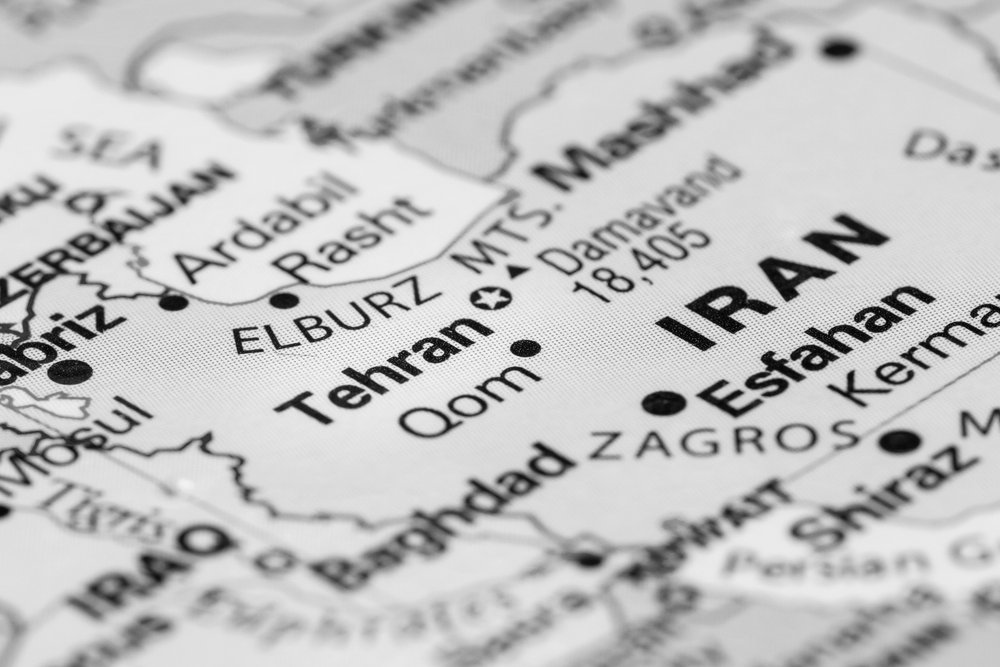
LAST weekend, Iran shot down a US MQ-1 Predator drone operating over international waters. That was the opening move. Iran fired first. Centcom (US Central Command) responded on Saturday and Sunday with strikes near Geruk and on Qeshm Island, hitting Iranian air defence systems, a ground control station, and two one-way attack drones that were threatening ships in the Strait of Hormuz. No US personnel were hurt.
Iran launched retaliatory strikes at US forces in Kuwait on Monday. Kuwaiti air defences intercepted them.
On Tuesday, Iran escalated again. It launched ballistic missiles at Kuwait and Bahrain. Two missiles fired at Kuwait fell short or broke apart in flight. Three launched at Bahrain were immediately intercepted by US and Bahraini air defence forces. Iran also sent attack drones at civilian maritime traffic transiting the strait. Centcom shot them down. The US struck a second Iranian military ground control station on Qeshm Island in direct response. Centcom confirmed no US personnel were harmed.
Iran publicly claimed it had successfully struck the US Fifth Fleet headquarters in Bahrain and a US air base in Kuwait. Centcom issued a direct correction: ‘All Iranian attacks on American forces failed.’
Then came Wednesday morning.
Iran struck Kuwait International Airport with drones and missiles. Terminal 1, the main passenger terminal, sustained extensive damage. The fuel depot was hit and caught fire. One person was killed. Sixty-three were injured. Seven emergency surgeries were performed. Kuwait Airways suspended all flights (though they seem to have resumed). The country closed its airspace. IndiGo, Emirates and other international carriers followed. A major civilian aviation hub in a country that asked for nothing in this conflict was burning because the IRGC targeted it.
Kuwait’s Defence Ministry described it as ‘criminal Iranian aggression which resulted in significant material damage and injuries’. They are not wrong.
Iran framed the airport strike as retaliation for US strikes on Qeshm. But the Qeshm strikes were themselves a response to Iran shooting down an American drone over international waters. Iran provoked, America responded proportionately against military targets. Iran responded by hitting a civilian airport and killing someone who had nothing to do with any of it.
That pattern is not new. It is the pattern of the last 45 years compressed into 72 hours.
The USS Abraham Lincoln is in the Arabian Sea enforcing the naval blockade. Centcom has redirected 122 commercial vessels for compliance. The cordon is not theoretical. It is active and operational. Iran has not broken it. What Iran has managed to do is kill a civilian at an airport, damage a passenger terminal, and prompt every major airline to suspend operations into Kuwait.
That is not a military victory. It is lashing out at civilians by terrorist funders who are now acting like terrorists.
No wonder Arab patience is waning.
Sunni Arabs were not big fans of Shia Persians before this conflict began. But the Arab world has a complicated relationship with Iran, partly based on massive amounts of money. Some of the willingness to look the other way with terror funding was based on Iranian money.
Now rich Iranian tourists have had visas revoked and assets frozen. You can’t have the place of your escape from the country, where your family extracts wealth by brutalising millions, as the place upon which your regime is raining missiles.
Initially, Qatar issued a statement expressing regret over American attacks on what it called the ‘sisterly Islamic Republic of Iran’. Kuwait suggested US military action violated international law. Saudi Arabia urged restraint. They were hedging, as Gulf states always do, trying to preserve relationships on both sides of a conflict they did not ask to be part of.
Then Iran made a decision that ended the hedging. Tehran struck all six Gulf Cooperation Council (GCC) states. Bahrain, Kuwait, Qatar, the UAE, Saudi Arabia, and Oman all took Iranian fire. Iran hit countries that had explicitly promised not to facilitate or support the US campaign against it. Countries that were staying neutral. Iran attacked them anyway.
The response was immediate and unifying. Saudi Arabia condemned what it called ‘blatant Iranian aggression’ and affirmed its readiness to support any measures in response, also expressing solidarity with the UAE. The Arab League convened virtually, with all member foreign ministers condemning Iranian strikes on Jordan, the UAE, Bahrain, Saudi Arabia, Oman, Qatar, Kuwait and Iraq. They affirmed the right of affected states to defend themselves individually or collectively. The GCC secretariat issued a joint condemnation calling the strikes ‘heinous’ and ‘treacherous’.
The UAE’s presidential adviser, Anwar Gargash, said: ‘This aggression doesn’t target one specific country, it targets all of us.’ He called for a unified Gulf front against Iranian aggression.
The Arab world has not unified against much in decades. They are unifying against Iran now. Not because of American pressure, but because Iran attacked them while they were trying to stay neutral, and attacked them again this week when they were trying to recover from the last attack.
One important qualification: the analysis is more complicated than pure unity. An April assessment from the Middle East Council on Global Affairs correctly noted that each GCC state has its own underlying orientation. Bahrain sees existential threat. Saudi Arabia is balancing development ambitions against security reality. Qatar still prefers de-escalation. Oman still has its door open to dialogue. The solidarity is real. Full co-ordination is still a work in progress.
But the direction is clear. Iran has spent three months burning the relationships it needed to survive international pressure. The Arab states that once provided Tehran diplomatic cover, trade routes, and quiet financial channels are now publicly condemning Iranian aggression in their own capitals. That is a strategic loss that no battlefield claim can offset.
To be continued.