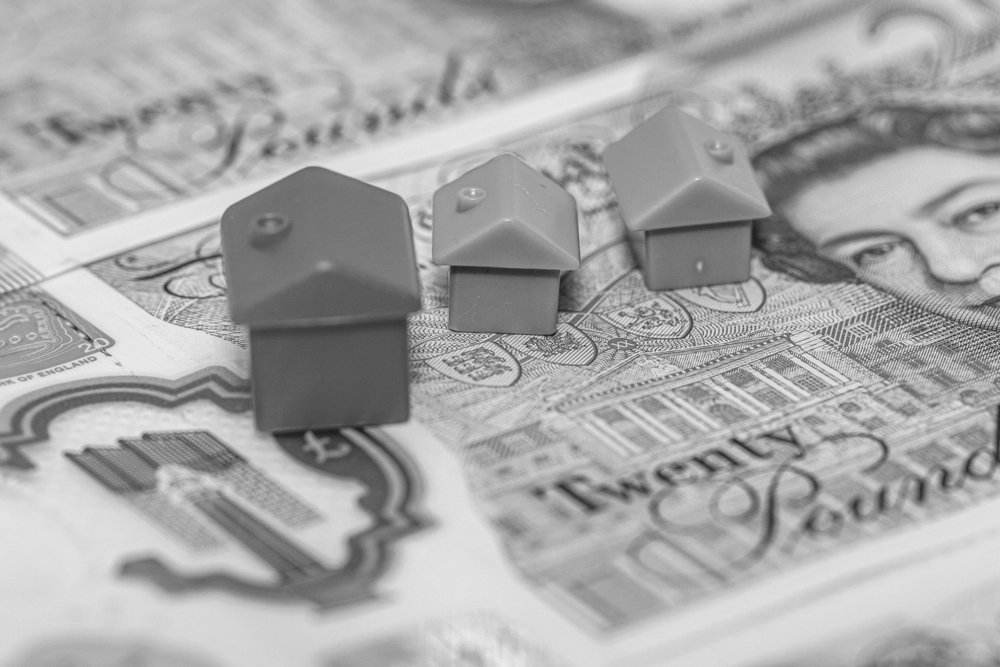
MANY of us sitting in the comfortable homes we have lovingly cherished over the years are quaking in our bedroom slippers at the grim prospect of what Chancellor Rachel Reeves might try to steal from us in next month’s Budget.
Chief of these concerns is the possible imposition of Capital Gains Tax when we sell our main home. While successive governments have raised or increased taxes on just about everything else, so far the primary home has remained inviolable. Well, up to a point.
Although they have not yet found a way to tax people on the financial gain they may have made on their main home, this does not mean that buying and selling a home is tax-free.
Far from it. When you buy a home, you will pay Stamp Duty Land Tax. On a modest dwelling bought for £295,000, this would come to £4,750 and on a home costing £1,250,000 you would pay £68,000. And what do you get in return for paying stamp duty? Nothing, absolutely nothing.
Then there would be estate agents, solicitors, removal firms, storage companies and surveyors to pay, all of whom charge VAT at 20 per cent on top of their fee; a tax that goes straight to the Treasury. This means that already the government pockets a handsome sum from every home transaction.
And when we die, inheritance tax has to be paid. In many cases, the deceased’s main asset will be their home, and IHT ensures that a large lump of any estate over the value of £325,000 goes to the taxman rather than to your beneficiaries.
So why clobber the beleaguered middle classes even more? The only answer can be spite, or to put it another way, class envy. Labour has always been in favour of soaking the middle classes; those of us who have always worked for a living, paid taxes on time, never been on the dole, never committed a crime, have saved carefully for our old age and generally lived blameless lives. And unlike the super-rich, we can’t easily hot-foot it off to a tax haven.
That’s why the middle classes are always being targeted for tax rises; most of us have no option but to stay put and pay up. We are easy targets for tax raids.
Already, VAT has been added to private school fees, and farmers’ descendants will have to pay inheritance tax on land valued at more than £1million. Also, although the winter fuel allowance has been partially restored, many older people will not now be receiving the annual £200, or £300 for households with someone aged 80 or over.
Not surprisingly, homeowners have come out in droves against the strong possibility that CGT will be imposed on primary homes, if not in this Budget, then at some time in the future. A recent survey showed that 97 per cent of homeowners were in total opposition to this tax, protesting that taxing main homes is not the fairest way of balancing public finances, with only three per cent of those polled being in favour; 71 per cent of homeowners made the point that this tax would make them less likely to sell.
And there you have it. Imposition of this tax would immediately snarl up the housing market, reducing movement and social mobility. It would mean that older people whose children have long since departed would continue to rattle around in the family home rather than downsizing. At the very least, this tax would substantially reduce the available housing supply.
In any case, it would be a nightmare to calculate. Many homeowners have lived in the same house for years, meaning that the property is worth many times what they paid for it. But this gain is usually more to do with inflation than any intention of making a profit.
House prices have not always kept in pace with inflation, which would have to be factored in when calculating any gain. Added to this, if you have occupied the same house for a long time, you have probably improved it, maybe extended it, and the chances that you have retained bills from, say, 20 years ago are remote. So how would even the canniest accountant work out any gain? If there is a mortgage on the property, with ever-changing rates, the tax payable would be even more difficult to calculate.
It has often been said that buying and selling a home are among the most stressful of all life’s activities, and the spectre of paying CGT would be such as to make people extremely reluctant to sell. So it is unlikely that this tax, if imposed, would even raise much revenue, as ever more homeowners would decide to remain where they are rather than put themselves through the sheer hell of CGT, a tax that was originally raised on business activities, not the roof over your head.
I know something whereof I speak as about as three years ago I had to pay Capital Gains Tax on the sale of a modest rental property I had owned since 1998. I had already paid yearly taxes on the rental income but was still liable for CGT on any profit from the sale. Talk about stress! I am still reeling! And never mind the menacing tone from HMRC, which caused even more stress.
Currently, a basic-rate taxpayer pays 18 per cent CGT on the overall gain, and a higher-rate taxpayer is charged at 24 per cent. This means that your total income is taken into account when the amount is calculated. CGT must be paid within 60 days of completion of the sale and ever-accumulating interest is charged on unpaid amounts. CGT has to be paid on time to prevent HMRC coming after you. A recent report stated that HMRC is getting ever more successful at chasing CGT, and don’t I know it. Even after I had paid a large five-figure sum following the sale of my rental flat – the amount worked out by my accountant after I had presented her with all the figures and bills available – and thought it was all over, a year or so later I was being chased for interest.
Then, over and above the CGT I had to pay, there was a considerable bill from my accountant for handling the tax liability. Quite honestly, I could never have worked it out myself, so I had no choice but to hire a specialised tax accountant.
For many years now, governments have been clamping down hard on anybody who has the audacity to buy a second home, with a stamp-duty surcharge and council tax premium, for instance. You are allowed one main home without incurring CGT on the sale. But if Labour has its way, you may not even be allowed that.
There is also talk of imposing an annual levy on homes worth over £500,000 and this will particularly hit those who are asset-rich and cash-poor. Once again, the prudent middle classes will be the ones to bear the brunt of this tax.
Rachel Reeves has said that those ‘with the broadest shoulders’ will be the ones to pay higher taxes. Yet most of us who have worked hard to own our own homes and save for our retirement, have very narrow shoulders indeed and they are becoming narrower and more hunched by the minute.
At the very least, our homes must remain sacrosanct and exempt from any more raids from the taxman: if CGT is imposed on sales of primary homes, it will wreck the housing market without filling one millimetre of the £30billion black hole Labour keeps banging on about.