There is suddenly a mighty crack in the cartel wall that has kept world oil prices in its thrall for the better part of 66 years. We could have probably heard the SNAP! from here.
The United Arab Emirates said Tuesday it will leave OPEC effective May 1, stripping the oil cartel of its third-largest producer and further weakening its leverage over global oil supplies and prices.
The UAE’s decision had been rumored as a possibility for some time, as it pushed back in recent years against OPEC production quotas it felt had been too low — meaning it wasn’t able to sell as much oil to the world as it had wanted.
“Having invested heavily in expanding energy production capacity in recent years, the bigger picture is that the UAE has been itching to pump more oil,” Capital Economics wrote in an analysis. “The ties binding OPEC members together have loosened,” it said, particularly after Qatar withdrew from the cartel in 2019.
This has been a long time coming for the United Arab Emirates (UAE), which had, until the Iran strikes changed everything, been engaged in an escalating duel with Saudi Arabia over the future of Yemen and the various rebel groups claiming supremacy there. Both countries had proxy dogs in the fight and had begun directly intervening in favor of them with airstrikes. As the Yemeni border snugs up to the Saudi Arabian one, UAE-backed rebels agitating so close to home irritated the Saudis to no end.
The Saudis also felt that Sheikh Mohamed bin Zayed Al Nahyan, the President of the UAE, was trying to muscle into leadership territory long held by the Saudis in the Arab World and they were having none of it
….The formation of the Presidential Leadership Council (PLC) in 2022 was an attempt to unite Yemen’s anti-Houthi factions, including the Saudi-aligned forces in favor of preserving post-1990 Yemen’s territorial integrity and the STC, under a single governing body. Nonetheless, the PLC proved largely ineffective and incapable of overcoming the major sources of deep-rooted strains within the council, especially those between the STC and Saudi-backed al-Islah party.
By December 3, 2025, the STC had conducted sufficient military operations to essentially bring all the territory, which was once part of the former state of South Yemen, under the control of the UAE-backed group. Their reach extended as far north as the Saudi border in Hadramawt and as far east as the Omani border in al-Mahra. Saudi Arabia considered the actions of the STC to have crossed a crucial “red line,” especially since its destabilizing activities had reached Saudi borders. What was especially provocative for Riyadh was the timing of this operation, which coincided with the 46th annual GCC summit. This led officials in Riyadh to conclude that Abu Dhabi had given the separatist group tacit approval to proceed with its plans.
The direct Saudi military intervention on December 30, 2025, was combined with coordinated operations by Riyadh-backed Yemeni factions. This resulted in the UN-recognized Yemeni government’s forces first taking back the land seized by the STC in Hadramawt and al-Mahra and then taking the fight to Aden. By January 9, 2026, the STC announced its dissolution, just 10 days after the UAE announced the withdrawal of its counter-terrorism forces, a move that Abu Dhabi framed as a means to de-escalate tensions.
The UAE withdrawal gave the Saudis the opportunity to try to cobble together a Riyadh-backed government in Yemen, and they have dumped billions into the effort. But it remains as fragile as the ceasefire they signed with the Houthis, and Al Nahyan’s government, while not on the ground in the country, is maintaining its ties.
…Riyadh believes that bringing together a united front against the Houthis, with Saudi Arabia leading the way, will push Ansar Allah (the Houthis) to make meaningful concessions. However, the entrenched divisions in Yemen raise questions about whether financial incentives and political backing can create lasting unity among groups whose loyalties are often shifting and uncertain.
The UAE, for its part, does not see its setbacks in Yemen as permanent. The withdrawal of Emirati counterterrorism forces does not prevent Abu Dhabi from advancing its interests through proxies, surrogates and local partners. Having invested heavily over many years, the UAE still has significant stakes in the country. Under President Mohammed bin Zayed, who is known for strategic persistence, there is every reason to expect Abu Dhabi to look for opportunities for a resurgence in Yemen – potentially at Saudi Arabia’s expense.
Both countries view Yemen strategically, particularly as an alternative energy export corridor for Saudi Arabia and as an additional seaport asset for the UAE’s growing maritime ambitions in the region. It’s all about a stable government and controlling the Houthis.
One concern when the Iran conflict kicked off was the possibility that the Houthis would attempt to close the Bab al Mandeb Strait to help their Iranian sugar daddies out. It didn’t happen, and thankfully so.
Then the Iranians began attacking their fellow neighbors, who are also OPEC members. Iran went particularly hard after the UAE and the Saudis had nothing to say about it.
Analysts believe this increased the hard feelings between the two and helped gel Abu Dhabi’s resolve to exit the cartel.
That and the simple mathematics of artificial cartel constraints on oil sales that they were chafing under.
The UAE quit OPEC
💡But the real story is more interesting than the headline.Let’s put the actual numbers on the table:
UAE OPEC+ quota for May: 3.447 mb/d
UAE actual March production: 1.892 mb/dGap: 1.56 mb/d already under-producing massively
The immediate constraint isn’t… pic.twitter.com/sbtj8Okp4q
— Jack Prandelli (@jackprandelli) April 28, 2026
…The immediate constraint isn’t OPEC+ paperwork, It’s Hormuz.
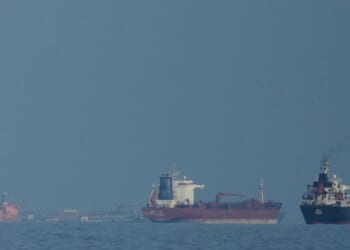
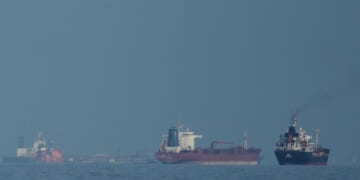
You can’t produce what you can’t export, and 87% of normal tanker traffic through the Strait has vanished.
Kuwait declared force majeure.
Saudi slashed output.
The UAE is in the same physical trap.
So if they can already produce more than their quota allows once Hormuz reopens why leave?
2 reasons:
💰Financial: Abu Dhabi is investing to hit 5 mb/d capacity by late decade. Staying in OPEC+ risks future quotas capping them well below technical capacity once the crisis passes.
They’re not solving a 2026 problem they’re removing a 2028 ceiling.
💥Personal: Iran attacked UAE infrastructure for weeks. Saudi Arabia said nothing. Not publicly, not privately, not symbolically. Abu Dhabi was taking hits from a war it didn’t start, under a quota framework that Saudi Arabia leads, protected by a partnership that went silent when it mattered.
The quota math gave them the cover.
The silence gave them the reason.
Once the Strait opens, this will allow 2 mb/d to hit the market that the OPEC membership had kept from being produced in order to keep prices stabilized.
The Emiratis now have nothing to hold them back regarding what it can produce. They are also readjusting who they will deal with, thanks to the Iranian conflict.
India and Greece are on the ‘friends’ list as well, while the vast majority of Arab countries are not.
This is signaling a major restructuring of decades-old ties.
Noteworthy
Article signals UAE intention to withdraw from Arab League, OIS & OPEC+
Friends who showed up:
US, Israel, France, UK, Italy, S Korea & Australia.Those who didn’t:
Egypt, Oman & other imp Arab countries..Im told UAE will “upgrade & downgrade ties accordingly.” 👇 https://t.co/faBrwVnjRS
— Firas Maksad (@FirasMaksad) April 25, 2026
The Emiratis are strengthening ties with the US. It doesn’t hurt that the country is able to route much of its production through a pipeline across the desert that pops out south of the troublesome Strait of Hormuz, but it’s nowhere near enough to offset what the Hormuz situation is strangling.
…The sudden departure of OPEC’s third-biggest producer further weakens a bloc that despite producing up to four out of every 10 barrels of oil pumped worldwide has been hobbled by internal disunity and the rise of American oil output.
The war in Iran has piled on more pressure by exacerbating rifts among the Arab countries at the core of the group and by closing the Strait of Hormuz, through which the group’s biggest producers export most of their oil, making it impossible for the group to influence the market during its biggest supply shock.
The U.A.E. is in a relatively privileged position with the ability to circumvent the blockage in the strait by routing more than half of its oil exports across the country. Withdrawing from OPEC will give it more freedom to make investments to expand its output and adjust to the uncertain future of the waterway.
The U.A.E. in recent years has asked to produce more of its oil under OPEC’s output accords. It has grown less willing to compromise as its relations with OPEC heavyweight Saudi Arabia, a neighbor and sometimes military partner, have frayed amid competition for regional leadership. By withdrawing, the U.A.E. is diminishing its relationship with a longstanding Arab-led bloc and aligning itself more closely with the U.S.
There is some market volatility predicted, but overall, everything I’m seeing seems to point to stability returning once the Strait is operating normally.
The UAE has long chafed under OPEC+ restrictions, especially during periods when it wanted to ramp up output. This exit echoes Qatar’s 2019 departure but carries far more weight given the UAE’s production scale and influence.
Expect near-term market volatility as traders digest… pic.twitter.com/M6mcLDXHie
— ⚡️David Blackmon⚡️ (@EnergyAbsurdity) April 28, 2026
…Expect near-term market volatility as traders digest what freer UAE barrels mean for supply. Longer term? More agile, market-responsive production from one of the world’s most efficient producers.
And former OPEC stablemates are already talking to each other.
Surely a coincidence this happened today (😇): The country leaving OPEC meets the country that left OPEC. https://t.co/huyApzdNkv
— Javier Blas (@JavierBlas) April 28, 2026
There is some concern about American oil producers if a glut were to suddenly develop, as they operate on pretty tight margins, but there are also indications that world energy needs will only increase in the future. Think of the burgeoning data center sector, for one.
Once the Strait opens again, or even before that, should UAE and Saudi pipelines remain available – or the Saudis start a price war – oil prices will settle back down.
Significant geopolitical shockwaves from the Iran War.. UAE, which was a member of OPEC, even before the country formally existed, has quit OPEC immediately. UAE has been the second largest holder of spare capacity in OPEC.
Longstanding aim to grow production well beyond its 3m… pic.twitter.com/wIWei3oiAu
— Faisal Islam (@faisalislam) April 28, 2026
…Emiratis have options on bypassing the Strait of Hormuz, as it geographically has sea access/ ports on either side, and there will be moves to expand the capacity of pipelines into Fujairah… indeed longer term, that could become an option for other Gulf nations too…
As for OPEC, this is a big blow, amid significant questions. Its not just that the UAE, when it can get its oil fully back on the market by sea or pipeline is likely to target 5m bpd production, Saudi might respond with a price war that the UAEs more diversified economy could withstand, but others might not.
While the world understandably focusses on oil at $110 per barrel, this is a reason why we should not discount the chance that it could be half that some time next year, depending on the Iran-US talks and the state of the Strait.
THE HARDEST BLOW EVER
…While the war has accelerated the U.A.E.’s departure from the cartel, OPEC delegates said it had been drifting away for some time. Its exit marks the first time a top producer has quit the group. Until now, only smaller oil producers like Qatar, Angola or Ecuador have left.
“It’s the hardest blow ever,” said Homayoun Falakshahi, a senior oil analyst at commodities data company Kpler. “It raises the question about whether OPEC can survive.”
Of ‘disturbance in the force’ magnitude.
The Saudis will have to be pretty nimble for it to survive with just them holding the bag.
It’s been a heckuva wild year, and it’s only April.