How did our traditional antipathy to third parties start in America, and what role have third parties played in our electoral history?
Introduction
 Former New York Governor Andrew Cuomo recently said that the Democratic party in America “is in a civil war.” The rise of the Democratic Socialist wing of the Democratic party and the consequent splintering of that party between moderates and leftists suggests the possibility of the emergence of one or more third parties, the presence of which could radically transform American presidential politics in the near future. A brief survey of third parties in American history can provide the necessary background for a consideration of the likelihood and consequences of new, third-party development.
Third Parties in the Nineteenth Century
Many Western democracies have multiple parties. Even in Britain, where a two-party system has been highly entrenched ever since the days of the Whigs and Tories, beginning in the mid-seventeenth century, the Liberal Democrats have sometimes tipped the balance between Conservatives and Labour in the passing of legislation and the making or unmaking of governments. In America, by contrast, third-party candidates, especially for President, are often thought of as spoilers who cannot win but can make it more difficult for one of the major party candidates to secure victory.
How did this traditional antipathy to third parties start in America, and what role have third parties played in our electoral history?
The first political parties in America, the Federalists and the Democratic-Republicans, began to emerge during President George Washington’s second term as a result of differences between Secretary of State Thomas Jefferson and Treasury Secretary Alexander Hamilton over fiscal and foreign policy. After Jefferson’s election in 1800 and his re-election in 1804, the opposing Federalist party began to disintegrate, although their way of thinking continued to dominate the Supreme Court, thanks to Chief Justice John Marshall. As the Federalists disappeared, however, sectional differences opened fissures in the Democratic Republican ranks.
In 1824, four major candidates vied for the presidency, each heading a separate sub-party or faction of the Democratic Republican party. Andrew Jackson of Tennessee was most popular in the South and along the frontier in what is today the mid-West; John Quincy Adams of Massachusetts had a lock on New England and New York; William Crawford of Georgia held his home state; and Henry Clay of Kentucky competed with Jackson on the frontier and in the West. Adams eventually won the 1824 election in the House of Representatives, but after Jackson won the White House in 1828, his own brand of the Democratic Republican party evolved into a new Jacksonian Democratic party, and his opponents coalesced into a new third party, the Whigs, which quickly became one of the two major parties, electing their first President, William Henry Harrison, in 1840.
The rise of slavery as the pivotal election issue produced a new third party, the Free Soilers, by 1848. By 1856, much of the ideology of the Free Soilers had been adopted by a new party, the anti-slavery Republicans.
The first Republican nominee for President John Fremont, who campaigned on the slogan Free Men, Free Soil and Fremont, received more than 1.3 million votes in the race against Democrat James Buchanan in 1856.
The 1860 election saw a split over the issue of slavery in the Democratic party between northern Democrats, led by Senator Stephen Douglas of Illinois, and southern Democrats under John Breckinridge. John Bell also headed a Constitutional Union party. With the Democrats split, the Republican Lincoln won the election with less than 40% of the vote.
After the Civil War, the now familiar division between Republican and Democratic parties became entrenched. Still, there was room for third and multiple parties. In 1872, no fewer than five candidates calling themselves Democrats competed in the presidential election. In 1880, the Greenback candidate won nearly 300,000 votes in the contest between Republican Garfield and Democrat Hancock. In 1892, the Populists, a new third party championing rights for farmers against the railroads and their grain storage monopolies, won four states in the West and more than a million votes. Four years later, the ideology of the Populists was adopted by the Democratic party with their nomination of the Great Commoner, William Jennings Bryan, for President. Bryan would go on to run two more times for the White House, in 1900 and later in 1908.
TR and 1912
By far the most successful third party in American presidential history was the Progressive or Bull Moose party of Theodore Roosevelt in 1912.
Disenchanted with what he saw as the stand-pat conservatism of his successor in the White House William Howard Taft, TR had sought to wrest the nomination of the Republican party from Taft in the spring of 1912, winning nearly all of the primaries, including the one in Taft’s home state of Ohio.
When the party bosses gave the nomination to Taft at the convention in Chicago, TR left the Republicans, founded his own independent Progressive party, and ran separately. Although he carried only half-a-dozen states that year, TR was the only third-party candidate in American history to come in second in a presidential race, receiving more than 4 million votes, nearly a million more than the Republican incumbent Taft. The split in the Republican party in 1912 resulted in the election of the Democrat Woodrow Wilson.
After TR’s death in 1919, the Progressives made one last attempt in presidential politics as a third party. In 1924, Robert La Follette ran as a progressive, third-party candidate against the Republican incumbent Calvin Coolidge and the Democrat John W. Davis. La Follette captured only his home state of Wisconsin, but much of the ideology of the Progressive party was later adopted by the Democratic party, with their progressive candidates Al Smith in 1928 and FDR in 1932 and beyond.
Third Parties After TR’s Progressives
It was the Democratic party’s policy of civil rights and desegregation that produced the first third parties of the second half of the twentieth century. In 1948, the Democratic party, which nominated incumbent President Harry Truman, included a pro-civil rights/desegregation plank in their party platform. Led by the Alabama delegation, the South walked out of the convention and later endorsed Strom Thurmond as a third-party States’ Rights candidate. Thurmond won only a handful of states in the deep South that year, but his candidacy in the close national contest between the Democrat Harry S. Truman and the Republican Thomas E. Dewey may have affected the outcome.
An even more substantial impact occurred from the third-party candidacy of George Wallace of Alabama twenty years later in 1968. Wallace tried to be kingmaker that year, asking his electors to pledge to vote for whichever candidate he told them to vote for. Republican Richard Nixon won the election by a razor-thin margin over the Democrat Hubert Humphrey that year, but a swing of a few thousand votes in the key states of California and Illinois would have denied Nixon a majority of the electors, allowing Wallace to swing the election, either in the electoral college or the House of Representatives. The contemporary American sentiment that third-party candidates are spoilers in presidential elections is sometimes traced back to the impact that Wallace’s candidacy almost had in 1968.
Recent Third Party Runs
No third-party presidential candidate has carried any state since Wallace in 1968, but several have won enough popular votes in key states to have a significant impact on the election. In 1980, Republican John Anderson ran as an independent after he lost the GOP nomination to Ronald Reagan. Anderson polled nearly 7% of the national popular vote, and, although Reagan won the election with more than 50%, fewer than half the states were won by a majority vote, and Anderson may have helped Reagan carry traditionally Democratic states like New York by taking progressive votes away from the Democrat, incumbent President Jimmy Carter.
In 1992 and again in 1996, wealthy businessman Ross Perot ran as a third-party candidate. With Perot’s name on the ballot, Democrat candidate Bill Clinton won with less than 50% of the vote nationwide, both in 1992 against the incumbent George H. W. Bush and in 1996 against Bob Dole.
In 2000, Ralph Nader of the Green party got almost 100,000 votes in Florida, the key swing state which George W. Bush ultimately carried by only 537 votes. In 2016, Libertarian candidate Gary Johnson won 3.3% of the popular vote with more than 4 million votes, a million votes more than the margin with which Hillary Clinton won the national popular vote in an election which Donald Trump won in the electoral college.
In the most recent presidential election in 2024, several third-party candidates secured ballot access in key states. Robert F. Kennedy, Jr. had been polling in the double digits as a third-party contender before he dropped out of the race and endorsed Trump in the summer of 2024. Kennedy’s name still appeared on the ballot in some states in the fall election, and his candidacy may have helped affect the outcome in some places.
The Future of Third Parties in American Politics
The historical survey suggests that third parties have tended to emerge when one of the major parties has split apart because it has alienated large numbers of its traditional voting base. This happened when the Democratic-Republican party split on sectional lines in the 1820s, when the Democratic party split over slavery in the 1850s, when the Republican party split in 1912, and when the Democratic party split over desegregation and civil rights from 1948 through the 1960s.
Today the Republican party appears to be relatively unified around Donald Trump’s band of “America First” nationalism, but the Democrats seem increasingly divided between the more extreme Democratic Socialists, led by New York Mayor Zohran Mamdani, Representatives Alexandria Ocasio-Cortez and Jasmine Crockett as well as Senator Bernie Sanders on the one side, and more traditional centrist Democrats like Senator John Fetterman of Pennsylvania on the other. The Democratic Socialist call for a platform that would abolish the Senate, make the President and the judiciary subordinate to Congress, eliminate both prisons and police, establish public ownership of most corporations, and defund both ICE and the Department of War has antagonized many so-called “main stream” Democrats, including liberal commentators like Bill Maher, who went so far as to say that he would consider voting for JD Vance if the Democrats went too far left, and Democrat party strategists like James Carville.
The rising popularity of the Democratic Socialist wing within the Democratic party cannot be denied, however. A recent CNN poll found that a third of Democrat voters identified as pro Socialist. In the recent congressional primaries in New York, the three Socialists backed by Mayor Mamdani defeated the more moderate Democrats. More recently, of course, Abdul El-Sayed, the so-called progressive candidate, defeated the more moderate Haley Stevens in the Democratic primary for the US Senate in Michigan. Progressive candidates Lawrence, Tlaib, and McKinney also beat more centrist opponents in the primaries in the 7th, 12th, and 13th congressional districts in Michigan.
Of course, the Democrat centrists have been fighting back and sometimes winning. In the Democratic primary in the NY 16th congressional district, the “moderate” candidate, former Westchester County Executive George Latimer defeated the more progressive Jamaal Bowman in what has been called “the most expensive House primary in American history.” In Missouri’s 1st congressional district, Wesley Bell, the moderate, defeated Congresswoman Cori Bush, the progressive. Moderates also won in the 1st district in Virginia and the 4th and 11th districts in Michigan.
In a recent CNN interview, Andrew Yang, a former Democratic candidate for President, said that the strength of the moderates in the party has been underestimated. He mentioned that the recent congressional victories for Mamdani-endorsed socialists in New York were “closed party primaries,” and therefore resulted from “a more limited voting universe.”
For that reason, Yang said, Mayor Mamdani’s team opposes open primaries in New York because they know that, “if you have more people vote, their [the socialists’] chances of winning go down, not up.” Moderates, he said, are more likely to win open primaries, in which Independents and sometimes even Republicans can vote.
There is no question that the Democrats are badly split at the moment, and tempers are flaring as the factions form. James Carville recently said in an interview that he could not be in the same party as Abdul El-Sayed. “One of us will have to go,” he added. In the midterms this November, the future of the Democratic party will depend a good deal on the fate of some of these progressive Senate candidates like El-Sayed, as well as Troy Jackson, who has replaced Graham Platner as the leftist Democrat candidate for the Senate in Maine, and James Talarico, who is running for the Senate in Texas.
If some or all of these Democratic Socialists win their general election battles this year, that will encourage them or others like them to run for President in 2028. They will, no doubt, be opposed for the nomination by Democratic candidates calling themselves centrist or moderate. Will the ensuing battle among Democrats produce a third-party challenge?
In his interview, Andrew Yang, who has recently founded a new Forward party, was asked directly whether he would consider running as an Independent in 2028. Yang did not deny that he was a candidate, and laughingly responded by saying to the interviewer, “Hey, I’m here with you, aren’t I?” He went on to say that “now, being an Independent is much more popular than being a Democrat or Republican.” Fifty percent of voters, according to Yang, say they are independent, and 65% say we have to move on from the two-party system. “We’ve been let down by both parties… and everyone knows it,” Yang concluded.
If the Democrats were to nominate a “moderate” for President in 2028, it is certainly possible that progressives might coalesce around a left-leaning, third-party candidate. Conversely, if the Democrats were to nominate Alexandria Ocasio-Cortez or Jasmine Crockett or some other such progressive, it is not inconceivable that a more traditional, Democrat, third-party candidate could emerge.
Are third-party candidates no better than spoilers who take votes away from the two major candidates in an effort to swing the results?
Some have suggested solutions like rank voting, which would allow voters to rank their choices when casting their ballots. This, it is said, would make it less likely that votes for third-party candidates would be considered wasted or would, by themselves, swing elections, since, if a voter’s third-party candidate proved unable to win, the voter’s second-choice vote would count instead. There is, however, no way of forcing voters to rank their votes, and certainly no way of predicting how rank voting would affect election outcomes.
Ultimately, if the Democratic party continues to splinter, America may well face the prospect of more third-party intervention in American presidential elections in the near future. Moreover, one of the third parties of today may well become one of the new major parties of tomorrow.
__________
The Imaginative Conservative applies the principle of appreciation to the discussion of culture and politics—we approach dialogue with magnanimity rather than with mere civility. Will you help us remain a refreshing oasis in the increasingly contentious arena of modern discourse? Please consider donating now.
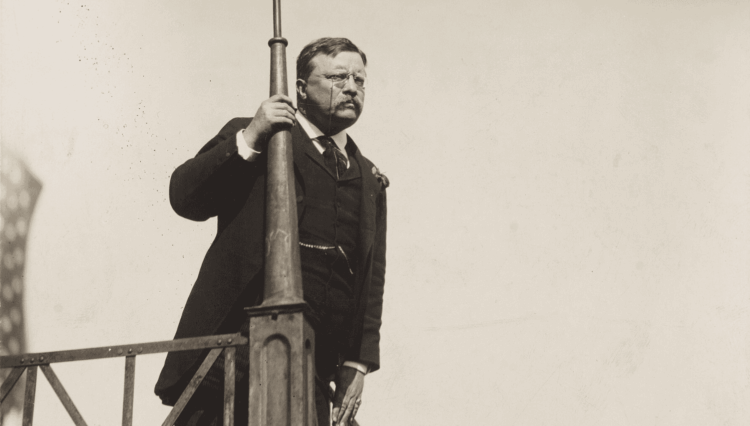
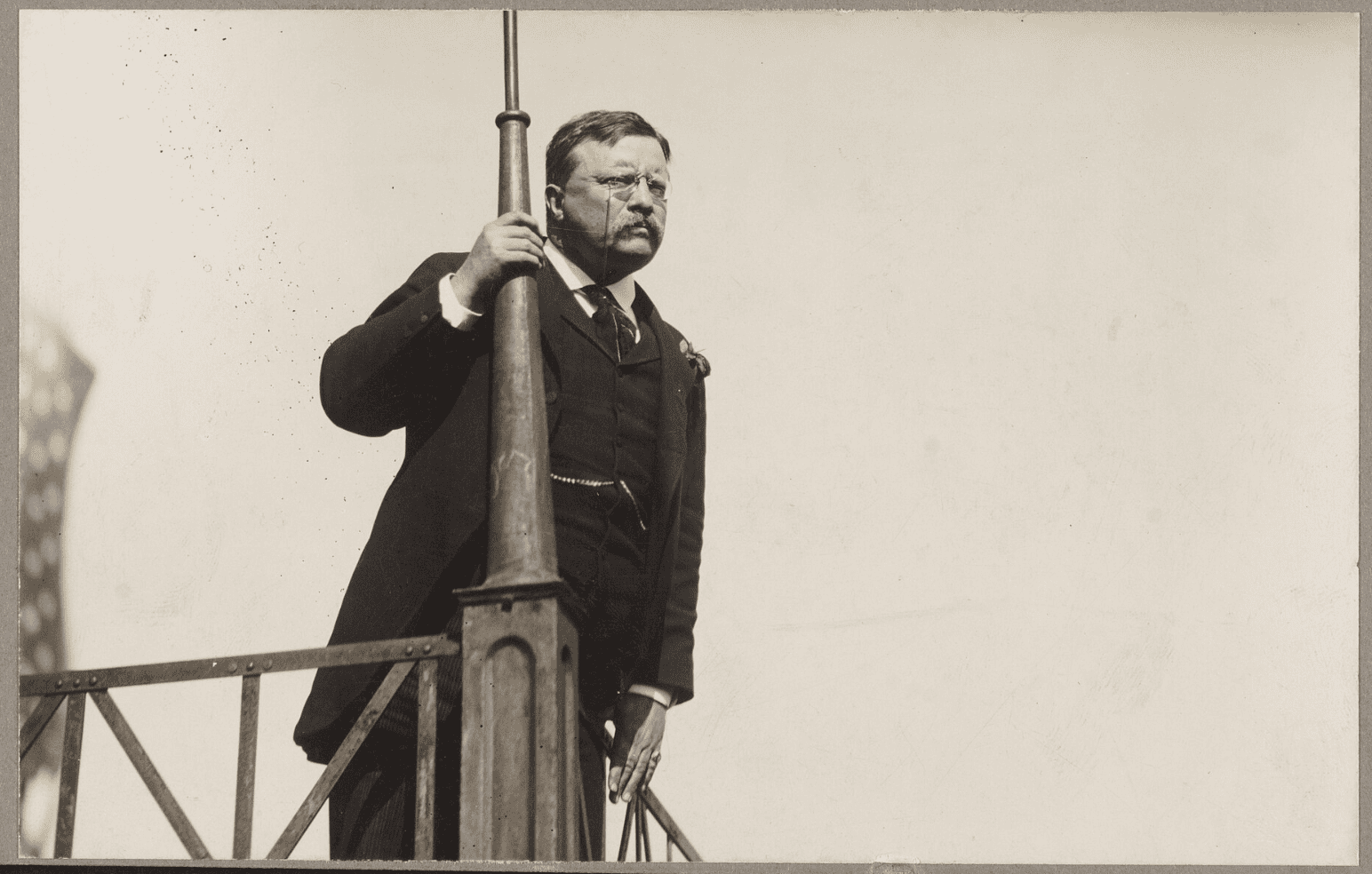
The featured image is a photograph, “Theodore Roosevelt speaking from a balcony” (1911), and is in the public domain, courtesy of Wikimedia Commons.