WHERE in the world is it most dangerous to be a Christian? Afghanistan? North Korea? No, it’s Nigeria.
According to the Open Doors charity, Nigeria has moved from the seventh most dangerous country in 2022 to the top of the list in 2024 after 3,100 people were killed and 2,830 kidnapped in that year.
When the death toll is counted for 2025, it is highly likely that Nigeria’s Christians will again emerge as the world’s most persecuted people; one massacre has been followed by another. About 62,000 Christian civilians have been killed by Islamists since 2000, with numbers rocketing in the last decade thanks to high-grade weaponry arriving from countries destabilised in the so-called ‘Arab Spring’.
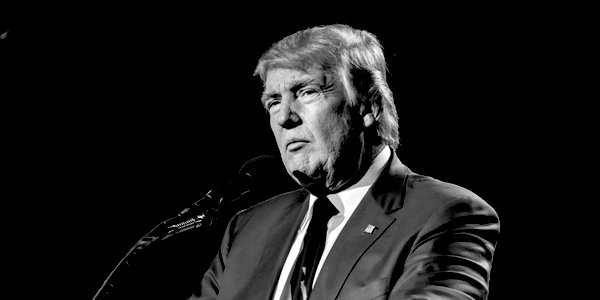
By and large the rest of the world has ignored this awful persecution but on Friday, US President Donald Trump did what Joe Biden had consistently refused to do and designated Nigeria as a ‘Country of Particular Concern’ because it engages in or tolerates ‘particularly severe violations of religious freedom’.
Writing on TruthSocial, President Trump said: ‘The United States cannot stand by while such atrocities are happening in Nigeria . . . we stand ready and willing and able to save our great Christian population around the world.
‘If the Nigerian government continues to allow the killing of Christians, the USA will immediately stop all aid and assistance to Nigeria, and may well go into that now disgraced country “guns-a-blazing” to completely wipe out the Islamic terrorists who are committing these horrible atrocities.
‘I am hereby instructing our Department of War to prepare for possible action. If we attack it will be fast, vicious and sweet, just like the terrorist thugs attack our cherished Christians! Warning: the Nigerian government better move fast!’
This intervention must be a godsend to the Christians of Nigeria who just two weeks ago were surely brought to the brink of despair by the bizarre comments of Cardinal Pietro Parolin, the Vatican Secretary of State, that the violence was not sectarian but a ‘social conflict’ between herders and farmers.
The cardinal must have known that his words contradicted what the Nigerian bishops have been screaming from the rooftops for several years, but he chose instead to echo the position of their Muslim-controlled government.
The massacre at Yelewata in Benue State in June demonstrates, however, what this persecution looks like through the eyes of Christians on the ground.
On that occasion about 500 refugees – Christians who had fled Muslim violence from other parts of the country – were sleeping in undefended temporary accommodation when they were attacked by Fulani Islamist gunmen who set fire to the buildings and sprayed bullets inside as they screamed: ‘Allahu Akhbar!’
Those who tried to flee were shot and hacked to pieces. The massacre lasted for three hours and left 271 people dead.
The day after, a witness described how ‘corpses were scattered everywhere . . . some burned beyond recognition – infants, children, mothers and fathers just wiped out’.
The local Catholic bishop, the Rt Rev Wilfred Anagbe of Makurdi, recalled that two victims were aged three years and five months.
One mother, he said, sought refuge on a roof but was ‘forced to witness the massacre of her five children and, in her despair, threw herself down’.
For many years Bishop Anagbe has been trying to attract the attention of the international community to the plight of the persecuted.
He came to London in March to tell the House of Lords that unarmed villagers in his diocese were being butchered ‘without consequence’ amid a campaign ‘to conquer, kill and occupy’.
The experience of the Christians of the area, he told peers, ‘can be summed up as that of a Church under Islamist extermination’.
In September, he was equally candid in an interview with the Italian daily Il Tempo, saying: ‘The most accurate word to describe the real situation of Christians in Nigeria is “genocide”. What is under way is the total elimination of the Christian population. It’s a jihadist genocide that is also a religious war against us.
‘For years, there has been a deliberate strategy to Islamise entire regions of the country, carried out through a violent agenda.
‘In Benue State, where my diocese is located, 98 per cent of the population is Christian, yet it has become one of the most dangerous areas.
‘The attackers – Muslims from outside the region – destroy churches, kill defenceless residents, force others to flee, burn their lands, and then return to occupy them. But this is a plan of conquest that also includes non-violent methods.
‘They change the names of villages, replacing them with Arabic ones. Islamic radicalism is reshaping social dynamics in Nigeria. Recently 12 States closed schools for weeks during Ramadan. Yet it is not only Muslims who live in those areas . . . Schools are not closed in Saudi Arabia or Afghanistan — so why are they in Nigeria?’
He added: ‘The Yelewata massacre is only the tip of the iceberg. In our villages, attacks occur daily. We have testimonies of pregnant women disembowelled by terrorists, who then cast aside their unborn babies. In the West, this receives little attention.’
If the West continues to ignore the persecution, it will reap a huge refugee crisis of ‘millions’ of Nigerians heading for the comparative safety of Europe, the bishop predicted.
‘The most responsible course for everyone,’ he said, ‘is therefore to resolve the crisis at its source and to guarantee security for Nigerian Christians.’
Western leaders are not only in the habit of ignoring the world’s worst persecution, as the bishop observed, but of also invoking their own ideological prejudices when something so awful forces them to glance up from their navels.
One of the most egregious examples came in 2022 after 40 Nigerians, including many children, were butchered by the Islamic State West Africa Province in a Catholic church on Pentecost Sunday, and the then Irish President Michael D Higgins sent a message of condolence in which he asserted that the massacre was a result of ‘climate change’.
This invited a severe rebuke from Bishop Jude Ayodeji Arogundade of Ondo, who told Higgins that the Islamists who have been given free rein to go ‘slaughtering, massacring, injuring, and installing terror in different parts of Nigeria’ do so ‘because they are evil – period’.
‘I wish to appeal to those who are trying to take advantage of this horrific event to project any form of ideological agenda, to desist from such opportunism,’ the bishop said.
Nigerian church leaders cannot afford the luxury enjoyed by Biden, Higgins, Parolin and others of pretending that the persecution isn’t happening or of deluding themselves that it’s a row between farmers or herders, or the consequences of climate change.
They know that if the Christians of their country are to survive, they and their allies must be very clear about the identity of those who are attacking them and their motives.
They cannot afford to overlook the reality that among the 53 per cent of Nigerians who are Muslims there are terror groups like the Fulani militants and Boko Haram, which for more than 20 years has kidnapped and killed its way not only across northern Nigeria but also parts of Chad and Niger, and that also active is the Islamic State West Africa Province, which arrived in 2015 and, like the others, seeks to turn Nigeria into an Islamist state under the rule of Sharia law.
In President Trump, they have found a Western leader willing to listen to their concerns and honestly face up to the truth of the persecution and to do something about it.
They must feel that at last, amid the darkness, a light has come on.