THE emergence of vigilante patrols on the streets of Rochdale following the release from prison of a convicted grooming gang ringleader is, at first glance, a local story. Such episodes are easily dismissed as spontaneous expressions of public anger, the predictable consequence of a controversial criminal case. Yet to do so would be to overlook the more interesting question. Why are citizens beginning to assume responsibilities that belong exclusively to the state?
The significance of vigilantism in Rochdale and elsewhere in Britain lies not in the number of people involved but in the assumption that underlies it: that the authorities either cannot or will not perform one of their most elementary duties. Political legitimacy depends as much on what citizens believe governments are capable of doing as on what governments actually do.
Taken in isolation, the events of recent years in Britain prove very little. Western democracies periodically experience shocking crimes, controversial court decisions and failures of public administration. No single episode tells us much about the condition of a nation. The picture changes when exceptional events begin to accumulate with unsettling regularity.
The Southport murders, where three young girls were killed and many others injured, sent shockwaves throughout the entire country. Beyond the horror of the crime itself came intense scrutiny of the state’s capacity to prevent such atrocities. The public debate that followed was as much about confidence in government as it was about one criminal.
Then came the Henry Nowak case. The public outrage was intensified by body-camera footage showing police officers handcuffing a dying knife victim as he lay bleeding on the ground. Whatever explanations may eventually emerge, the images themselves became emblematic of something deeper: a perception that the institutions entrusted with protecting the public have become hesitant and increasingly detached from ordinary expectations of justice.
Other controversies have revolved around the policing of speech rather than violence. The prosecution and imprisonment of Lucy Connolly for a single post on X, together with other arrests under hate speech legislation, have generated an intense public debate, not only about freedom of expression but about priorities. These episodes involve different circumstances and legal challenges. They may nevertheless point to the same underlying phenomenon.
No small number of citizens have come to believe that state bureaucrats, elected and unelected alike, act with greater determination when policing online speech than when confronting violent crime or persistent public disorder. Whether that perception is entirely fair is a matter of debate. That it exists is beyond dispute. Nor does it arise in a vacuum. Today, a growing number of people are one click away from ending up behind bars, and not just for a couple of hours. Social order ultimately depends not only on truth, but on how facts are perceived.
Nearly two and a half centuries ago, Edward Gibbon offered one of history’s most enduring reflections on social and political dissolution. His great insight into the fall of Rome was that no single event brought down an empire, but that a succession of individually explicable failures gradually revealed a deeper process of structural decay. The significance of each episode lay less in the event itself than in the pattern they formed.
That insight remains valuable precisely because it is not confined to Rome. Gibbon was teaching a broader lesson about political societies: institutions seldom collapse all at once. They are weakened gradually until events that would once have been absorbed without lasting consequence begin to expose structural fragilities.
Equally striking is another Gibbonian observation, one that receives less attention than his discussion of military decline or barbarian invasions. The erosion of confidence often precedes the erosion of institutions themselves. Rome’s laws remained. Its offices continued to exist and its administrative machinery survived long after much of its authority had faded.
Societies rarely become unstable overnight. The process is usually slower and less dramatic. The accumulation of exceptional events eventually produces a subtle but profound transformation. What once appeared to be isolated anomalies gradually begins to resemble a pattern. The extraordinary slowly ceases to be extraordinary.
The key question is whether citizens continue to believe that state institutions can perform their essential functions: maintaining public order, enforcing the law impartially and administering justice competently. If confidence in those functions begins to weaken, the outward forms of constitutional government may remain entirely intact while something less visible, yet ultimately more important, gradually and imperceptibly begins to erode.
None of this means that Britain stands on the brink of civil war as some commentators suggest. Such a conclusion is unsupported by the available evidence. Hyperbole makes for clickbait, after all. But what if vigilante patrols are not an isolated incident, but the first visible symptom of a broader crisis of confidence in the British state’s capacity to perform its essential functions?
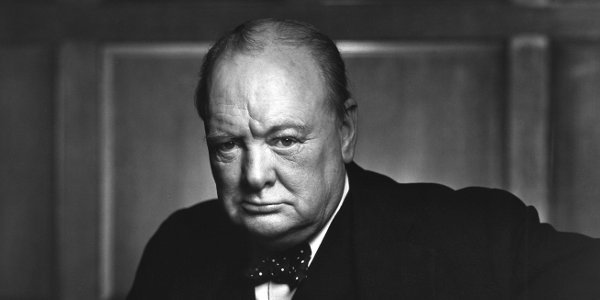
One cannot help wondering how Winston Churchill, the historian rather than the statesman, would read Britain’s present predicament. In A History of the English-Speaking Peoples, he chronicled Britain as a nation shaped by successive waves of transformation. The native Britons gave way to the Romans. The Romans departed. Angles, Saxons, Danes, Vikings and Normans each left their mark upon the island. Civil wars, religious upheavals, industrialisation, imperial expansion followed in turn. Britain’s story did not end there. The post-war decades brought new waves of immigration from the Caribbean, the Indian subcontinent and Africa, adding yet another layer to a nation that had always been shaped by change. To Churchill, these were not interruptions in Britain’s story. They were Britain herself.
Would he regard today’s anxieties as merely another chapter in that long and often turbulent history? Or would he conclude that something more fundamental is taking place – not simply another transformation, but a gradual erosion of the confidence that has long enabled Britain’s institutions to absorb change without losing their authority?
Time alone will answer that question.