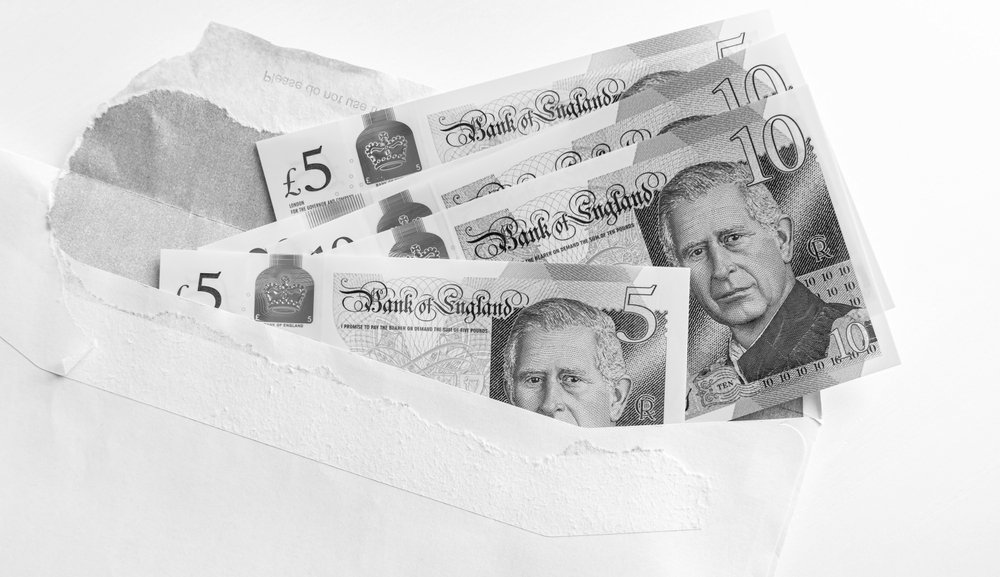
A VEXING experience awaits anyone attempting to use cash in Britain. One enters a café, a supermarket, or even a public event carrying legal tender only to discover that physical money is treated as if it were counterfeit currency, and those who still insist on using it are regarded as if they had arrived from another planet. No law has prohibited cash. No decree has abolished it. Yet through countless small refusals repeated across daily life, people learn that participation in the economy involves digital traceability or, more simply, an erosion of privacy.
Crowds standing on a railway platform in Europe in 1900 inhabited a world almost unrecognisable by contemporary standards. They could often cross borders without a passport, purchase tickets in cash, disappear into large cities without leaving meaningful records, and communicate privately through letters that move more slowly than the state’s agents themselves.
Modern individuals, by contrast, shift through an environment saturated with systems of exhaustive registration, authentication, and observation. Every payment, journey, login and digital interaction contributes to an expanding informational portrait of daily life. They are being profiled down to the smallest detail.
The contrast between these two worlds is not merely technological. It reflects a profound transformation in the relationship between the individual, the state and the economic system.
The late 19th century represented the high point of what historians sometimes describe as the golden liberal age. Between 1815 and 1914, particularly in Europe, border controls were comparatively light. Passports existed, but in many places they were inconsistently enforced or unnecessary for ordinary travel. A businessman could travel from Paris to Vienna, or from Berlin to Milan, with a degree of spontaneity that surprises a modern observer.
This relative freedom was possible partly because states lacked the administrative and technological capacity to monitor populations continuously. Bureaucracies were much smaller and communications were infinitely slower. Identification systems were primitive. Most human activity unfolded beyond the permanent gaze of institutions. Cash transactions vanished once completed. Conversations disappeared into the air. Travel left few traces beyond memory and scattered paper documents. Fragile, ephemeral, easily forgeable pieces of paper were the only medium.
The First World War shattered the old order. Governments discovered that industrial warfare required unprecedented control over populations: conscription, rationing, border security, intelligence gathering and economic management. Temporary wartime measures gradually became permanent administrative structures. The passport system, initially strengthened for military necessity, survived the war and evolved into a standard feature of international life.
As the 20th century progressed, the transformation deepened. Mass taxation required reliable identification. Welfare states required detailed records. Aviation demanded formal border procedures. Totalitarian regimes demonstrated how bureaucracy could be fused with surveillance on a terrifying scale. Later, computing and digital networks expanded the reach of information collection beyond anything previously imaginable.
Yet contemporary surveillance differs fundamentally from older authoritarian models. In the past, it was visible and labour-intensive. Governments relied on informants, secret police, intercepted correspondence and physical observation. Monitoring citizens required enormous manpower. Today, much of the process occurs automatically through ordinary participation in everyday life. Even when inactive, smartphones can generate metadata revealing movement patterns, routines, and social connections.
Debit and credit card payments generate searchable digital records that reveal habits, preferences and economic behaviour with extraordinary detail. The purchase of a train ticket, a meal or a hotel stay becomes part of a permanent informational archive. Individuals leave traces everywhere, often without awareness.
‘Cash is freedom’ reads a sign pinned to a grocery shop’s door in north London. The line sounds quite sensible. And yet countries that usually boast of their respect for individual liberties allow anyone who wants to pay in cash to be treated as if they were fugitives from justice. The absence of penalties for refusing to accept legal tender in countries like the United Kingdom, the Netherlands and Denmark is a clear indicator of the West’s slide toward totalitarianism.
Urban policing has also changed dramatically. Cities such as London possess extensive CCTV networks that make anonymous movement increasingly difficult. Facial recognition technologies further intensify this trend by transforming passive observation into active identification. Combined with mobile phone data and digital payment records, espionage systems in plain sight can reconstruct a person’s activities with remarkable precision. No single mechanism appears tyrannical in isolation. The transformation emerges from accumulation.
Search engines, social media platforms, online retailers and telecommunications companies maintain detailed profiles of billions of individuals. The result is a hybrid system of surveillance in which public and private power overlap in complex ways. The ubiquitous apps are gateways to a dimension as unknown as it is dangerous. ‘Lady, I never walk into a place I don’t know how to walk out of,’ says Sam to Deirdre at the beginning of the film Ronin. This is a line that should be written on the refrigerator door as an everyday reminder.
The central question that 21st century individualists should pose is not whether surveillance exists – it plainly does – but how to establish stringent limits upon it. The challenge is to preserve the genuine benefits of technology without creating a civilisation in which every action becomes permanently recorded, searchable and analysable.
Vast majorities have grown accustomed to living in a police society, under the constant vigilance of a police state run by an unaccountable cadre of bureaucrats. What could possibly go wrong?
The surge of AI projects an even more ominous shadow. The worst is yet to come.