IMPORTANT body camera footage has been released from the murder of Henry Nowak, who died in part because of the deep failures of the police.
Mr Nowak was 18 years old. He was a Polish-British finance student at the University of Southampton, described by everyone who knew him as kind, intelligent, and full of promise. He was walking home from a night out with university friends in the early hours of December 3, 2025.
He never made it home.
He was passing through the Portswood suburb of Southampton when he crossed paths with Vickrum Digwa, a 23-year-old man carrying a 21cm ceremonial knife. Digwa stabbed Nowak five times, including a fatal wound to the chest and additional wounds to his legs.
After the stabbing, Digwa’s family arrived at the scene. They called police and reported Digwa’s fabricated account that Nowak had racially abused him. Digwa’s mother then removed the murder weapon from the crime scene and hid it at their family home.
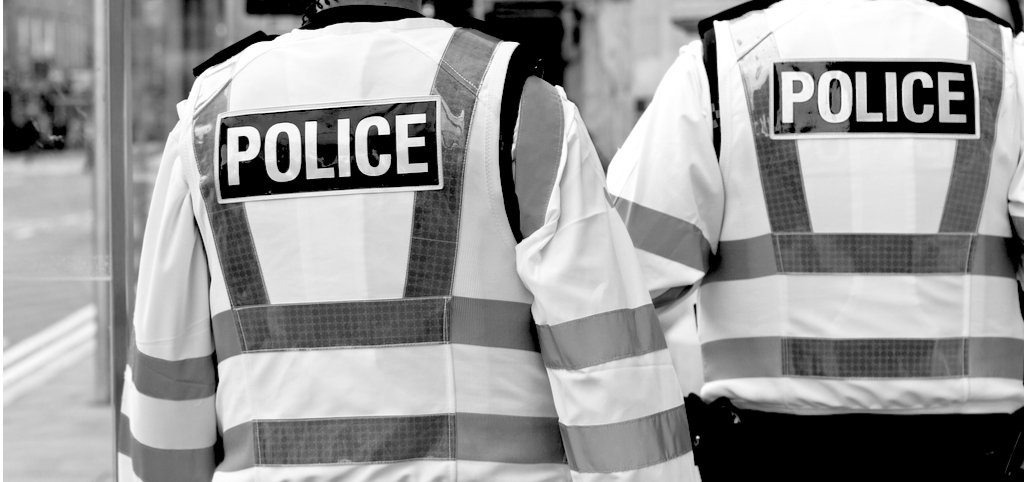
The police accepted Digwa’s race-accusation at face value and treated the dying teenager as the suspect rather than the victim. Although he told police he had been stabbed, Nowak was read his rights and handcuffed. Three minutes later he collapsed unconscious. He died at 12.37am, about hour after he was stabbed.
The bodycam footage is shattering. It showed the student pleading for help and struggling to breathe, handcuffed, while officers administered no treatment. A police officer told Nowak: ‘I don’t think you have, mate,’ when Nowak said he had been stabbed. It was only when Henry went unconscious that CPR was attempted.
He died in handcuffs, on the pavement, having been treated as a criminal by the people whose job was to protect him.
The judge presiding over the trial stated plainly: ‘Henry Nowak dying alone, humiliated and handcuffed was a direct consequence of Vickrum Digwa’s dishonesty,’ and noted that Digwa’s defence, which portrayed Henry as a violent, drunk, racist aggressor, compounded the grief of the family.
The judge called Digwa’s race claim a ‘wicked lie’. He noted that even after the stabbing, Digwa was recorded speaking in Punjabi, agreeing to pretend he had acted in self-defence even though he had confessed to stabbing Henry three times, including once in the chest. Digwa acknowledged that if cameras had captured what happened, self-defence would be impossible to argue.
Digwa’s mother, Kiran Kaur, was also convicted of assisting an offender for removing the murder weapon.
Digwa was sentenced to life in prison with a minimum term of 21 years.
Hampshire Constabulary apologised. They referred the case to the Independent Office for Police Conduct. They used the word ‘misled’.
That word is doing extraordinary work. Mr Nowak told officers he had been stabbed. He was visibly bleeding. He was gasping. A dying 18-year-old boy begged for his life and was told, in effect, that his white skin and the killer’s racial accusation settled the question of who the victim was. That is not being misled. That is a failure of basic human perception twisted by institutional conditioning.
This did not happen in a vacuum. It happened inside a British law enforcement culture that has spent decades choosing racial optics over innocent lives.
In Rotherham alone, a conservative estimate found that more than 1,400 girls were sexually exploited between 1997 and 2013. The majority of known perpetrators were of Pakistani heritage. Local officials and agencies had been wary of identifying ethnic origins for fear of upsetting community cohesion or being seen as racist.
State institutions, inquiries found, avoided the topic for ‘fear of appearing racist, raising community tensions or causing community cohesion problems’.
Early whistleblowers, including an MP, a former police officer, and journalists were dismissed as Islamophobic and racist. A Channel 4 documentary about Asian men grooming girls in Bradford was postponed in 2004 over fears it could lead to race riots.
A chief inspector in Rotherham admitted to the father of a victim that abuse had been ignored due to fears of increasing racial tensions, reportedly saying ‘with it being Asians, we can’t afford for this to be coming out’. The police watchdog upheld that complaint.
The grooming gang scandal unfolded across more than 50 towns, involving tens of thousands of victims. Fearing accusations of racism, police ignored complaints. The children, overwhelmingly white working-class girls, paid the price for that institutional cowardice.
Mr Nowak paid the same price, with his life, on a Southampton street in 2025.
His father, Mark, has spoken with the quiet, devastating dignity of a man who has processed a horror that should not be possible in a functioning country. He said his family holds Digwa solely responsible for his son’s death.
But the institutions have questions to answer that a single conviction cannot close.
A boy said: ‘I can’t breathe.’ He said he had been stabbed. He was handcuffed. The man who stabbed him was not. The man who stabbed him played a race card. The institutions trained to see that card and fold did exactly what decades of grooming gang cover-ups had trained them to do.
They protected the narrative. They buried the victim.
Mr Nowak deserved better from the country his family made their home. Britain owes his memory a reckoning that goes far deeper than an apology from a temporary deputy chief constable.
Watch and pray.