TWO weeks ago we published the first of Brian Meredith’s recollections from his childhood in the 1950s, which he described as ‘a place which simply does not exist any more. Not in any significant aspect or detail’.
He wrote: ‘In the 1950s, England was a more gentle place, where people seemed to have more time for each other. Nowhere was this more evident than in the interactions between grown-ups and the children. These days, the mutual aloofness and distance which routinely characterises encounters between strangers across the “generation gap” make it difficult for anyone too young to remember to picture just how safe, friendly and perhaps, equally important for a child eager to explore the world around him, simply how accommodating the England of my childhood really was.’
This is the third of his four anecdotes from that time which hopefully illustrate the sort of unconditional kindness that a child might receive from complete strangers.
You can read Parts 1 and 2 here.
***
Throughout the summer of 1958, following on from the largely experimental Preston Bypass, the countryside around Rugby was alive with the sound of heavy machinery, as work to build the M1, Britain’s first purpose-built trunk-road motorway, proceeded seven days a week, between Watford in Hertfordshire and Crick in Northamptonshire.
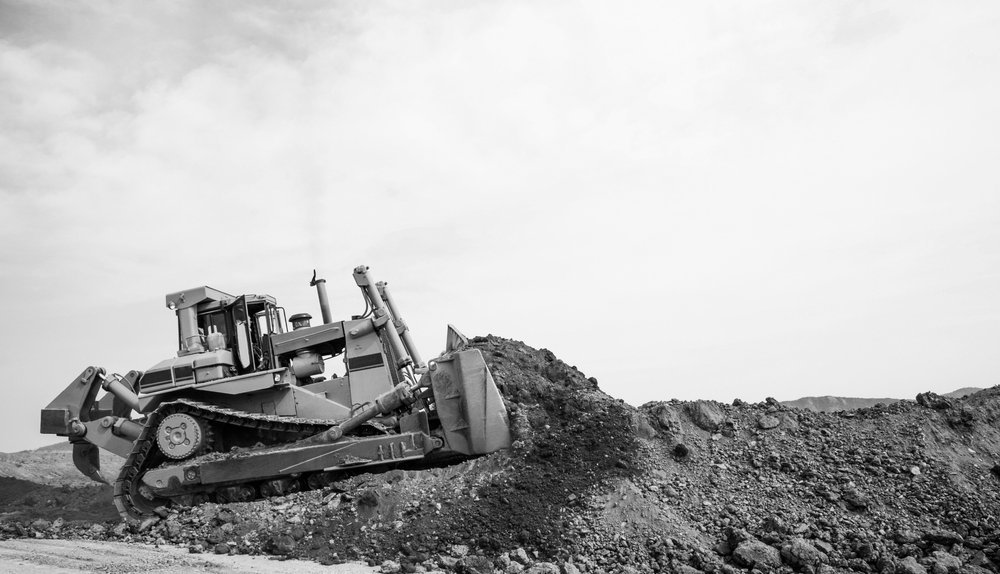
On one of our Sunday morning cycle rides my father and I came across a very busy scene, where a whole fleet of earth-movers was removing the top of a hill, creating a cutting and depositing the earth about half a mile away to form an embankment. These giant scrapers were hauled by Caterpillar tractors propelled on tracks, not wheels. These units made a formidable and unstoppable sight as they scooped up more than 60 tons of the English Midlands countryside with every pass.
Noting our interest, the driver of one of these giants stopped his tractor close to where we were standing and asked my father, ‘Would the boy would like a ride on the tractor?’
Of course I would and thankfully, my father agreed. Riding on that huge, powerful vehicle was exciting enough, but things were about to get even better.
‘I’ll show you how to steer one of these, it’s really very easy,’ the driver told me. It certainly turned out to be simple, if not actually ‘easy’. There was no steering wheel, just two big levers set side by side. The left one controlled the speed of the left track, while the right-hand one controlled the other. By varying the speed of each track, the tractor would veer either to the left or right. Using both hands and pulling with all my might, I was just about able to move the levers sufficiently to keep the tractor on course.
When we reached the point where earth was to be removed, he pointed to a lever behind us. This was connected to the scraper unit and controlled the height of the huge, wide blade which dug its way into the earth. On his command, I pulled the lever and was relieved to discover that a system of hydraulics took care of the physical effort required to activate the blade, to such a degree that it could be operated by a nine-year-old boy.
After a few passes, the driver decided to stop for a cup of something from his flask, so we returned to where my father was waiting. When he climbed down from this huge machine, my father thanked him for his kindness and a conversation between them started.
The driver had an unmistakably German accent and my father, noting his age and the fact that he was driving a tracked vehicle, guessed correctly that he had served in the war. Sure enough, he had been a Panzer tank driver and had been taken prisoner in the Ardennes. This was the offensive which was christened by the American war correspondent Larry Newman as the ‘Battle of the Bulge’. Coincidently, it was somewhere my father had also seen action, having been ‘seconded’ to serve with the American army, and in the process earning a bronze star medal for his service there.
As the war drew towards a close, after six long years, one of my father’s responsibilities had been to help solve the logistics problems being created by the ever-increasing numbers of Wehrmacht prisoners of war.
I couldn’t help but be surprised to see that the mood between Pieter (now known as ‘Pete’ to his workmates) and my father was without any sense of resentment or blame.
Neither he nor my father had wanted war, they had simply responded to their nations’ call. They even managed to smile at the distant possibility that they may have ‘met before’!
After his capture by the Allies, Pieter had been brought to a prison camp in England and he told us that when he passed through London and Coventry he was shocked to see the degree of devastation wreaked on our cities by the Luftwaffe.
Consequently, he had made a decision that when the war was finally over, he would not return to Germany, but would elect to stay in England and help rebuild the country that ‘his’ Fuhrer had done his best to destroy. After all, he had the skills to drive a bulldozer. And so, here he was, over a decade later, still helping to not only ‘rebuild Britain’ but to propel her into the future by helping to construct Britain’s first autobahn!
As we rode home, my father told me how glad he was that the opportunity had presented itself for me to see first-hand that not all Germans were the cruel, strutting Nazis that were inevitably portrayed in the war comics that I was eagerly devouring at the time.
Next week: Mackerel fishing – not for the squeamish!