DAY 69, (Saturday May 9) counts from February 28, when Operation Epic Fury began with American and Israeli strikes on Iran. That operation ran 38 days of major combat, achieved its stated military objectives, and ended with a ceasefire on April 7. The White House declared it a victory.
By any objective military measure, it was. Day four is the count from Project Freedom, which Trump launched Monday morning Middle East time (May 4) and which has already produced exchanges of fire, American counterstrikes on Bandar Abbas and Qeshm Island, and a pause that the administration framed as diplomatic space rather than retreat. Two operations. Two clocks. One ongoing conflict.
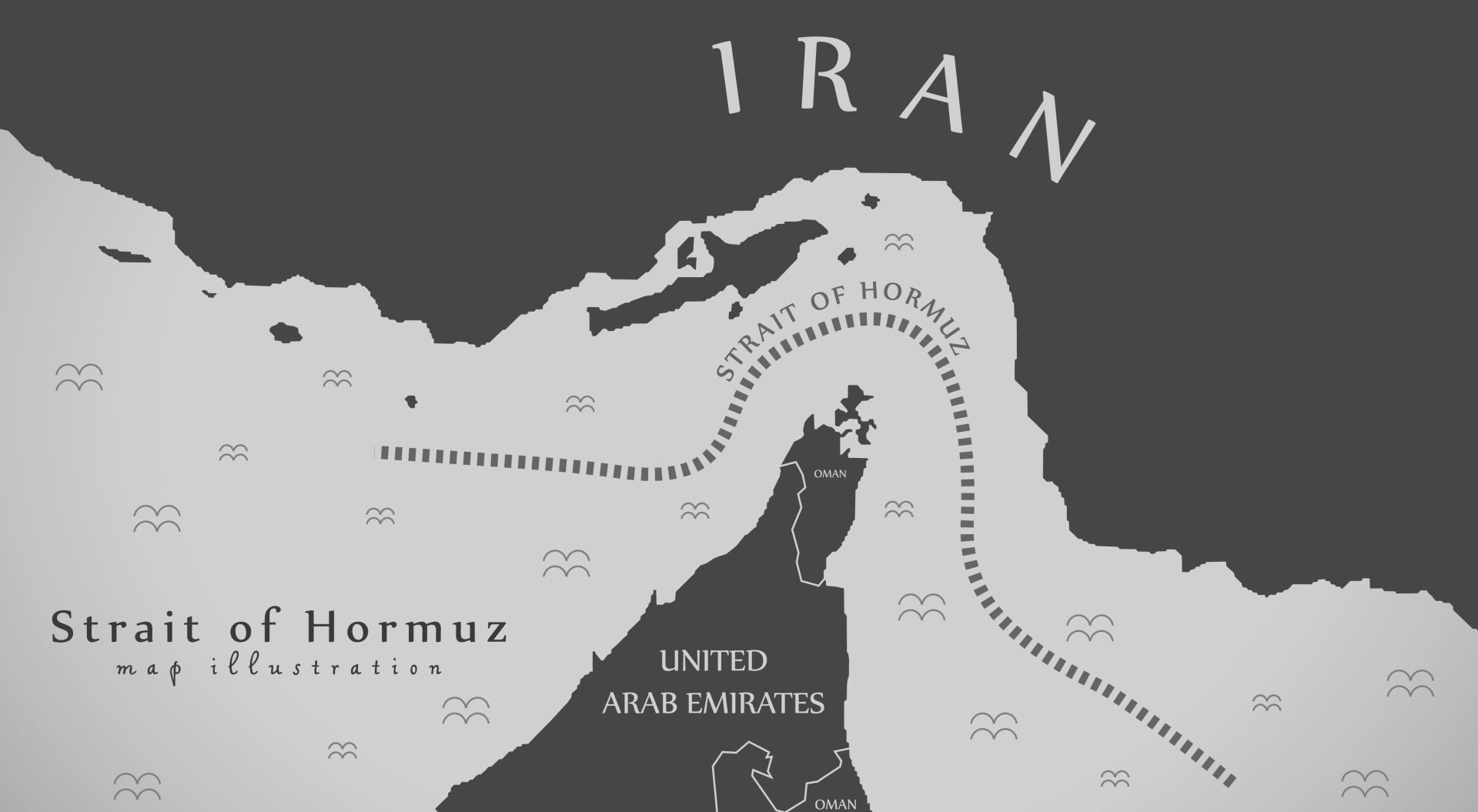
It has been 32 days since the ceasefire was declared. In those 32 days, Iran has fired on commercial vessels nine times, seized two container ships, attacked American forces more than ten times, struck UAE oil infrastructure, and published a map claiming a new control zone over the Strait of Hormuz that included Fujairah. The ceasefire is a legal status. What has been happening inside it is a different thing entirely.
Before the Trump-Xi summit arrives this week and rewrites the frame, this is the moment to take a full accounting. Why did we go in? What did Operation Epic Fury actually accomplish? What did it cost? Who absorbed the damage? And what does the world look like on the other side of 69 days of the most consequential American military campaign since the second Gulf War?
The answer is more consequential than the cable news coverage suggests. Let me give it to you plainly.
First, the reason we went in:
There is no ambiguity about why Operation Epic Fury happened. Iran cannot have nuclear weapons. That is not a policy preference. It is a civilisational line.
A Twelver Shia theological movement whose eschatology requires catastrophe as a precondition for the return of the Mahdi cannot be permitted to hold nuclear weapons. This is not a comment about the Iranian people, who have shown extraordinary courage in the face of a regime that murders them for uncovering their hair. It is a comment about the institution that runs their country. An institution that exports terrorism to seven countries, that funds the murder of Israeli civilians and American soldiers, that has vowed the destruction of Israel as a theological obligation, and that has spent 30 years lying to international inspectors while pursuing the weapon it promised it was not pursuing, cannot be allowed to complete that pursuit. The consequences of being wrong are not recoverable.
Iran believed it could continue the lie. It had reason to believe that. Every previous American administration had absorbed Iranian deception, negotiated frameworks that bought Tehran time, and flinched when the moment for decisive action arrived. The Obama administration made a deal that the Iranians immediately began circumventing. The Biden administration tried to return to that deal while Iran accelerated its enrichment. The pattern was established and Iran was counting on it continuing.
Trump did not flinch. And the intelligence picture that made the opening of Operation Epic Fury so decisive deserves to be understood clearly.
Israeli human intelligence inside Iran was dramatically better than American human intelligence. That is not a criticism of our agencies. It is a recognition of geography, language, and decades of cultivated networks. Israel had penetrated the IRGC command structure at a level that allowed it to know where senior commanders would be, when they would be there, and what their security arrangements looked like. That intelligence was shared. The Iranians believed, based on every prior American president, that we would never act on it. They had been lied to by their own confidence.
The decapitation campaign that opened this war was not an improvisation. It was the product of intelligence work years in the making, executed at a moment when the Iranians were certain no strike was coming. The IRGC commander. The intelligence director. The naval commander. The air defence leadership. The missile programme leadership. The heads of proxy networks. The senior theological authority. Each of those names that accumulated in the opening days of the campaign represents a person who was in a specific location at a specific time because Iran believed American restraint was permanent. It was not. And using their certainty against them is not just good strategy. It is justice for everyone who died because prior administrations let that certainty stand.
So what has Operation Epic Fury accomplished?
Let’s start with the proxy network, because that is where the strategic transformation is most dramatic and most under-reported. The Islamic Revolutionary Guard Corps (IRGC) external operations wing functioned for four decades as the most effective state-sponsored terrorism infrastructure on earth. It funded, armed, trained and directed Hamas in Gaza, Hezbollah in Lebanon and Syria, the Houthis in Yemen, Shia militia networks in Iraq, and Palestinian Islamic Jihad in the West Bank. Each of those organisations drew its operational capacity from the same source: Iranian petrodollars, Iranian weapons, and Iranian strategic direction flowing through IRGC Quds Force networks.
That source has been reduced to a trickle.
Iran is losing $500million per day under the current blockade. Before the blockade, the war destroyed the physical infrastructure that sustained proxy funding. The missile production facilities are gone. The weapons depots that supplied Gaza and southern Lebanon through Syrian intermediaries are gone. The naval assets that moved weapons through the Red Sea corridor are gone. The air defence systems are gone. The IRGC commanders who ran the external operations architecture are dead.
The downstream consequences are measurable. The Houthis have been degraded to a fraction of their prior operational tempo. Hamas entered this conflict already hollowed out by the post-October 7 campaign in Gaza. Hezbollah has shifted to fibre optic FPV drones because its rocket inventory is depleted and its resupply corridor through Syria is severed. The fighting in Lebanon that Israel could never quite finish because Hezbollah always had more missiles coming is now, for the first time in decades, a fight Israel can actually finish.
The nuclear programme is the second achievement, though it remains incomplete. Iran’s enrichment facilities sustained significant damage in the opening strikes. The leadership of the programme was systematically targeted. What remains is a capability in unknown condition held by an institution losing $500million a day. That is not a programme on the verge of weaponisation. Complete, verifiable, irreversible denuclearisation has not been achieved. That is the business still before us. Iran has enriched uranium, we do not know where it is, and we are not going to let them keep it. But the conditions that made Iranian weaponisation feel inevitable in 2024 no longer exist in 2026.
What about the Russian ledger – what did Putin earn and expose?
Russia has played a specific role in this conflict. It has not been a neutral one. The Institute for the Study of War (ISW) documented that Russia provided Iran with satellite imagery of American, Gulf, and Turkish military assets throughout the war. Russia’s UN ambassador went to the Security Council and argued that Iran has every right to limit traffic in the Strait of Hormuz. Russia has been moving limited supplies to Iran over the Caspian Sea corridor, a route that bypasses the naval blockade entirely. Putin offered Iran’s foreign minister Araghchi warm words and a photograph in Saint Petersburg and called it a strategic partnership.
None of that changes the military reality on the ground. But it does reveal what Russia calculated it could gain from this conflict without entering it directly.
The Strait of Hormuz closure produced the largest oil supply disruption in the history of the global energy market. Russian oil bypasses Hormuz entirely. Every day the Strait has stayed closed, Russian crude has sold at premium prices to energy-desperate buyers who had no other options. Brent crude peaked above $120 per barrel. Russia sells its oil at a discount to that benchmark, but even at a substantial discount, the revenue windfall from 69 days of elevated prices has been worth tens of billions of dollars to a government that desperately needs every ruble it can accumulate.
Put that number on the scorecard. Russia has absorbed somewhere between 350,000 and 500,000 military casualties in Ukraine by most credible estimates, a loss rate that would have been considered catastrophic by Soviet operational planners and that has exposed the Russian military as unable to defeat a Nato-equipped adversary even when American troops are not in the fight. Putin is under pressure at home from the families of the dead, from the oligarch class watching sanctions grind at Russian financial reserves, and from a military that has been revealed as a paper tiger wearing a nuclear costume. The oil windfall from Iran’s war has been his relief valve. He did not have to fire a shot to collect it. He just had to keep Iran fighting long enough for the prices to stay elevated.
That is the honest account of Russian interest in this conflict. Not ideology. Not solidarity with the Islamic Republic. Petrodollars flowing into a treasury that the Ukraine debacle has been draining. Putin is not Iran’s ally. He is Iran’s landlord collecting rent while the building burns.
The military exposure matters too. The world watched American carrier strike groups enforce a blockade that no navy on earth attempted to break. Not Russia. Not China. The countries that have spent a generation telling their populations that American military dominance is a historical anomaly about to be corrected watched the United States destroy a regional power’s military in 38 days of major combat operations with 13 combat deaths. The lesson is not lost on anyone paying attention in Moscow or Beijing.
In Part 2 tomorrow Clayton Wood looks at China’s role in the conflict, and why the Trump-Xi summit on Thursday and Friday is the most important diplomatic event of this conflict.